


Choosing a new washing machine can feel surprisingly complicated. Both front-load and top-load washers can clean everyday clothes effectively, but they differ in how they use water, energy, space, and wash cycles.
So, front load vs top load washer: which one is better for your home?
The answer depends on your laundry habits, available space, household size, budget, and the features you value most. A front-load washer may be a better fit if efficiency and cleaning performance are your priorities, while a top-load washer can be appealing if you prefer simpler loading and generally faster, more familiar operation.
Let’s compare the two options so you can make a more confident buying decision.
Front-Load vs. Top-Load Washer: What’s the Difference?
The biggest difference is how you load the clothes.
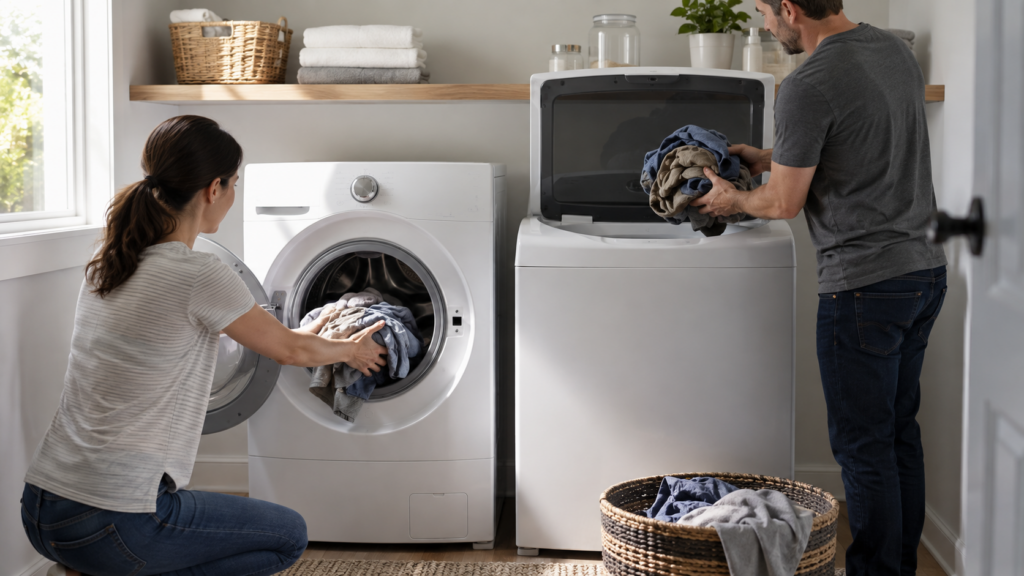
A front-load washer has a door on the front. Clothes are placed into a horizontal drum that rotates and tumbles the laundry through water and detergent.
A top-load washer has a lid on the top. You load clothes from above, and the drum or wash basket moves the laundry through the wash cycle.
Modern top-load washers are available with either a traditional agitator or an impeller. Agitator models use a central post to move clothes, while impeller models use a low-profile plate at the bottom of the basket.
Both designs have evolved significantly, so the choice is no longer simply about old-fashioned versus modern technology. Instead, each design offers different advantages depending on how you do laundry.
Front-Load Washer vs. Top-Load Washer at a Glance
| Feature | Front-Load Washer | Top-Load Washer |
| Loading | Front door | Top lid |
| Water efficiency | Generally very efficient | Varies by model |
| Energy efficiency | Generally excellent | Varies by model |
| Cleaning performance | Excellent | Excellent |
| Accessibility | Can require bending | Easier to load from above |
| Cycle time | Often longer | Often shorter |
| Stacking | Many models can be stacked | Generally not stackable |
| Maintenance | Requires door gasket care | Generally simpler |
| Price | Often higher | Wide range of prices |
| Best for | Efficiency and space flexibility | Convenience and easy loading |
These are general differences, not guarantees for every model. Washer performance and efficiency can vary considerably between brands and individual models.
Which Washer Cleans Clothes Better?
Cleaning performance depends more on the specific washer, cycle, detergent, load size, and settings than simply whether the machine loads from the front or top.
Front-load washers tumble clothes through a relatively small amount of water. This tumbling action can provide thorough contact between clothing, water, and detergent while being relatively gentle on many fabrics.
Top-load washers can also deliver excellent cleaning results. Models with agitators provide strong mechanical movement, while impeller models use a different motion to circulate clothes through the wash.
If cleaning performance is your main concern, look beyond the loading style. Compare wash cycles, stain-removal options, temperature settings, drum capacity, spin speed, and other features that match your laundry needs.
Water Usage: Front-Load vs. Top-Load Washer
Water consumption is one of the biggest considerations when comparing washer types.
Many modern front-load washers are designed to use less water than traditional top-load machines. Because the drum tumbles the clothes rather than completely filling the wash basket, the washer can clean laundry with a relatively small amount of water.
However, not every top-load washer uses excessive water. High-efficiency top-load models can also be designed to reduce water consumption compared with older conventional machines.
If lowering household water usage matters to you, check the specific model’s efficiency information instead of relying only on whether it is a front-load or top-load design.
Energy Efficiency: Which Washer Uses Less Energy?
A washer’s energy consumption is affected by more than the motor itself.
Front-load models often have an efficiency advantage because they generally use less water. Less water can also mean less energy is required to heat that water during warm or hot wash cycles.
Another factor is the spin cycle. Front-load washers commonly extract a significant amount of water from clothes before they move to the dryer. Drier clothes can potentially reduce the work required from the dryer.
Top-load high-efficiency washers can also offer strong energy performance. If you’re comparing models, look for the ENERGY STAR label and review the model’s estimated energy and water consumption.
Which Has More Capacity?
Both front-load and top-load washers are available in a wide range of capacities.
For families who regularly wash bulky loads, a larger-capacity washer can make a noticeable difference. You may be able to wash more towels, bedding, or clothing in fewer loads.
However, capacity should not be the only consideration. A very large washer may not be necessary for a smaller household, and overloading any washer can affect cleaning performance.
Think about what you wash most often. If you frequently wash comforters, large towels, or family-sized loads, prioritize a washer with enough usable drum space for those items.
Which Washer Is Easier to Load?
This is where personal preference becomes especially important.
Top-load washers can be easier for people who prefer standing while loading and unloading laundry. You can open the lid and place clothes directly into the wash basket without opening a front door.
Front-load washers require you to bend down to access the drum. For some households, that is a minor inconvenience. For others, it can be an important consideration.
A front-load washer can also be paired with a compatible pedestal, which raises the machine and can make loading and unloading more comfortable.
Before buying, consider who will use the washer most often and how comfortable the loading position feels.
Which Takes Up Less Space?
If you’re working with a small laundry room, the washer’s dimensions and installation requirements matter.
One major advantage of many front-load washers is the ability to stack a compatible washer and dryer vertically. This can free up valuable floor space.
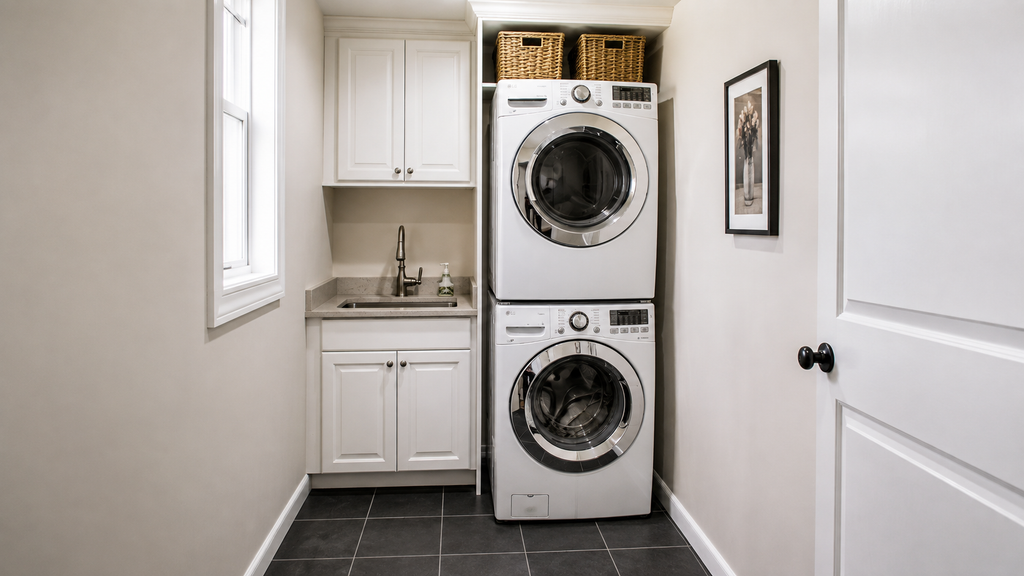
Top-load washers generally need open space above the machine because the lid needs to open. That can make them less suitable for installations underneath cabinets or shelving.
If your laundry area is narrow but has enough vertical clearance, a front-load washer and compatible dryer may provide a more space-efficient setup.
Always check the manufacturer’s installation requirements and required clearance before purchasing.
Maintenance: Front-Load vs. Top-Load Washer
Maintenance is another area where the two designs differ.
Front-load washers have a door gasket that seals the drum. Moisture can remain around the gasket after a wash, so leaving the door slightly open when appropriate and regularly cleaning the gasket can help with routine maintenance.
Top-load washers don’t have the same front-door gasket design, which can make routine care feel simpler for some owners.
However, both types require basic maintenance. Follow the manufacturer’s recommendations for cleaning the washer, using the correct detergent, checking hoses, and running any recommended cleaning cycles.
A washer that is regularly maintained can provide more reliable performance over time.
Which Washer Has Faster Wash Cycles?
If you frequently need clean clothes quickly, cycle time may influence your decision.
Top-load washers often have shorter standard cycles, although this varies significantly by model and selected settings.
Front-load washers can take longer on certain cycles because they may use additional wash or rinse processes designed around efficiency and cleaning performance.
The good news is that many modern washers include quick-wash or rapid cycles for lightly soiled clothing.
If speed matters to you, compare the actual cycle times for the models you’re considering rather than assuming one washer type will always be faster.
Which Washer Is More Affordable?
Price varies widely across both categories.
Basic top-load washers can be relatively affordable, making them attractive to shoppers who want a straightforward appliance without paying for additional features.
Front-load washers can have higher purchase prices, particularly when they include advanced wash programs, larger capacities, or smart features.
But the initial purchase price isn’t the whole cost of ownership. Water consumption, electricity use, detergent requirements, maintenance, and expected lifespan can all affect the long-term value of a washer.
Instead of asking only, “Which washer costs less?”, consider which model provides the features and operating costs that make sense for your household.
Front-Load Washer Pros and Cons
Pros
- Generally strong water efficiency
- Excellent cleaning performance
- Many models offer high energy efficiency
- Higher spin speeds can remove more moisture
- Compatible models can be stacked with dryers
- Useful for households focused on efficiency
Cons
- Loading requires bending
- Some cycles can take longer
- Door gasket requires regular care
- Purchase price can be higher
- Door needs to remain closed when not in use only according to manufacturer guidance, with routine care to manage moisture
Top-Load Washer Pros and Cons
Pros
- Easy loading from above
- Familiar design for many households
- Some models offer shorter wash cycles
- Agitator and impeller options provide different washing styles
- Wide range of prices and capacities
- No front-door gasket to maintain
Cons
- Some models can use more water
- Generally not suitable for stacking
- Deep wash baskets can be difficult for some people to reach
- Performance varies significantly between models
Front Load or Top Load Washer: Which Is Better for You?
There isn’t one answer that works for every household.
A front-load washer may be the better choice if you prioritize:
- Water and energy efficiency
- Strong cleaning performance
- Larger laundry loads
- Stackable installation
- Higher spin speeds
- A modern laundry setup
A top-load washer may make more sense if you prioritize:
- Easy loading from above
- Simpler everyday operation
- Potentially shorter standard cycles
- A broad selection of price points
- An agitator or impeller design
Your laundry room can also influence the decision. If you have limited floor space and want to stack your washer and dryer, a front-load configuration may be worth considering. If easy loading is your priority, a top-load model may be more convenient.
Find the Right Appliance for Your Home
Whether you’re looking for a washer, dryer, refrigerator, or another essential appliance, explore more options and find the right fit for your home and budget.
What Should You Look for When Buying a Washer?
Once you’ve decided between the two designs, compare individual models carefully.
1. Capacity
Choose a drum size that matches your household and typical laundry loads. Buying a washer that’s too small can mean more cycles, while an unnecessarily large model may take up additional space.
2. Efficiency
Review water and energy consumption. Look for ENERGY STAR-certified models if efficiency is an important part of your decision.
3. Wash Cycles
Consider which cycles you actually need. Useful options may include normal, delicate, heavy-duty, bedding, quick wash, and specialized cycles.
4. Spin Speed
A higher spin speed can remove more water from clothes before drying. This can be particularly useful if you want to reduce dryer time.
5. Dimensions
Measure your laundry space before ordering. Don’t forget to account for door or lid clearance, hoses, ventilation, and room needed to comfortably load the machine.
6. Maintenance Requirements
Check what routine maintenance the manufacturer recommends. Understanding these requirements before buying can help you choose a washer you’ll be comfortable maintaining.
7. Price and Long-Term Value
Compare the purchase price with expected operating costs and useful features. The cheapest washer upfront isn’t necessarily the best value over its lifetime.
The Bottom Line
So, front load vs top load washer: which is better?
For many households, front-load washers are appealing because of their efficiency, cleaning performance, high spin speeds, and stacking options. They can be particularly useful when water consumption and laundry-room space are important considerations.
Top-load washers remain a strong choice for shoppers who want easy loading, straightforward operation, and a wide selection of models and prices.
The best washer for your home isn’t necessarily the one with the longest feature list. It’s the one that fits your space, laundry habits, household size, budget, and priorities.
Before buying, compare the specifications of individual models rather than choosing based only on the washer’s loading style. That approach will help you find a machine that works well for your home for years to come.
