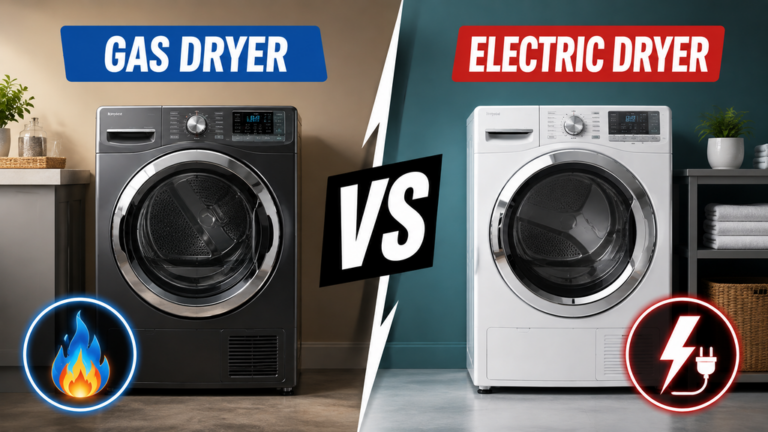
One of the first questions people ask when their dryer needs replacing is a simple one. Gas vs electric dryer – which one is better?
The right choice hinges on the existing hookup of the house, installation costs, local energy prices, drying needs and long-term plans.
The major difference between gas and electric dryers lies in the way they produce heat. Gas dryers produce heat from natural gas and propane, whereas electric dryers get their heat from heating elements.
For someone trying to choose between these two types of dryers, knowing the differences will definitely make shopping easier and prevent unforeseen expenses related to installing a dryer.
First, Check the Laundry Room: Gas or Electric?
Before comparing dryer prices, homeowners should check the laundry room’s existing connections. A home’s current setup can determine whether a gas or electric replacement will be easier and less expensive to install.
How to Identify an Electric Dryer Hookup
Traditional electric dryers usually need a special 240-volt circuit along with a special type of dryer outlet. Four-prong outlets are common in modern settings; however, there are still houses that use three-prong outlets.
It is important that the outlet not be recognized solely based on its physical appearance. Those unsure about their electrical wiring arrangements should refer to the appliance’s instruction manual or consult an electrician.
Knowledge about the difference between 120v and 240v dryer outlets is very crucial when considering the purchase of a new one. This will involve more electrical work and thus raise the overall cost of the process.

How to Identify a Gas Dryer Hookup
A gas dryer normally requires both a standard 120-volt electrical outlet and an appropriate gas supply connection. The laundry area may include a gas pipe, shut-off valve, and approved connector.
Both gas and electric dryers also require proper exhaust ventilation unless the model is specifically designed as ventless.
One should never modify or disconnect any gas connection themselves. In case of installation or relocation of any gas line, a professional must perform the task in accordance with the relevant local regulations.
Gas vs. Electric Dryer Cost: What Will Homeowners Really Pay?
The gas vs electric dryer cost comparison should include more than the purchase price. Installation and long-term energy use can have a significant effect on the total cost of ownership.
Which Dryer Costs More to Buy?
Best electric dryers are often less expensive upfront than comparable gas models. However, actual pricing varies according to capacity, brand, features, smart technology, controls, efficiency, and design.
Those homeowners looking to purchase a gas dryer for sale would do better by comparing units of similar capacities than by thinking that all gas dryers are expensive.
The same applies when looking at electric dryers on sale. A discounted model may appear attractive, but shoppers should first confirm that it is compatible with the home’s existing electrical setup.
Don’t Forget Installation Costs
Installation can make one option considerably more attractive than the other.
An electric dryer is generally easier to install when a compatible 240V outlet and appropriate vent are already available. If the home needs a new circuit or outlet, however, an electrician may be required.
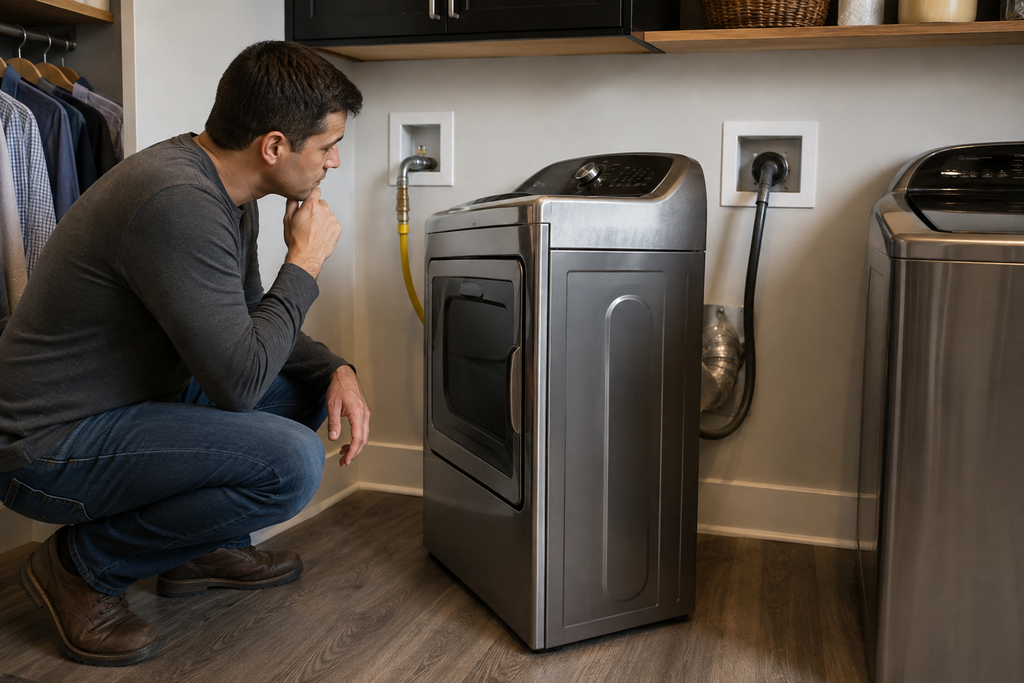
It is also possible to have a gas dryer installed relatively easily if there is already a gas connection available. However, if there is no gas connection, it will add considerably to the overall cost of gas dryer installation. There are many factors that may affect the total cost.
What About Monthly Operating Costs?
Operating expenses depend on several variables, including:
- Local electricity rates
- Natural-gas rates
- Number of loads
- Dryer efficiency
- Load size
- Cycle settings
- Moisture-sensor technology
- Vent condition
While a gas dryer might be cheaper to run in a place where natural gas is significantly cheaper compared to electricity, this does not mean that gas will always be cheaper in all homes.
What people need to do is calculate their costs based on their local energy costs and how much they expect to use the dryer.
Which Dryer Dries Clothes Faster?
Drying speed can be important for large households, families with children, or anyone who regularly handles several loads in one day.

Do Gas Dryers Dry Faster?
One of the most common questions is, do gas dryers dry faster?
The burners used in gas dryers are used for generating heat. Nevertheless, the actual time taken to dry clothes depends on many factors such as the specific type of model used, the cycle used, and the moisture content among others.
Therefore, gas dryers are efficient and fast but cannot be used solely to determine faster drying cycles.
Are Electric Dryers Slower?
A typical dryer uses heat-producing coils to generate heat. It is able to give consistent heat and efficient drying performance.
In contemporary electric dryers, there can be moisture sensors, automatic cycle adjustment, airflow optimization, and various temperature settings. In such cases, an efficient electric dryer gives excellent drying performance.
When comparing electric dryer vs gas dryer models, shoppers should evaluate the complete appliance rather than assuming gas is automatically faster.
What Actually Affects Drying Performance?
Several factors can influence drying time:
- Moisture-sensing technology
- Drum capacity
- Load size
- Selected cycle
- Heat setting
- Vent airflow
- Lint-filter condition
- Exhaust vent cleanliness
A restricted dryer vent can reduce airflow and increase drying time regardless of whether the machine uses gas or electricity.
Energy Efficiency: Gas vs. Electric Dryer
Energy efficiency is an increasingly important consideration for homeowners. However, energy efficiency and operating cost are not exactly the same thing.
A dryer may use energy efficiently but still cost more to operate if that energy source is expensive in a particular area.
Is a Gas Dryer More Energy Efficient?
The energy source for gas dryers is natural gas or propane, while the source of energy for electrical parts like motor and control is electricity.
In cases where there is cheap availability of natural gas, it would be economical to have a gas dryer. But one needs to understand the difference between cost of energy and energy consumption of the appliance.
This distinction is important when comparing energy efficient dryer gas vs electric options.
Where Electric Dryers Can Have an Advantage
Electric dryers can be attractive for homes that are moving toward electrification. They may also work well with homes that use renewable electricity or rooftop solar.
However, just because the device runs on solar energy does not mean that it will be free to run or even carbon neutral. This will depend on the production of solar energy, the energy use at home and the timing.
Homeowners interested in efficiency should therefore examine the specific dryer technology rather than choosing solely according to the energy source.
What About Heat Pump Dryers?
Heat pump dryers provide a third option worth considering. They run on electricity and recycle heat through the drying system rather than relying on a conventional electric heating element.
These dryers can use significantly less energy than conventional electric models. However, they may have higher purchase prices and different cycle times.
For apartments, condos, and homes where conventional venting is difficult, some heat pump dryers can also provide greater installation flexibility.
Maintenance, Lifespan, and Safety
Neither type of dryer should be treated as a completely maintenance-free appliance. Regular care can improve performance, efficiency, and safety.
Which Dryer Is Easier to Maintain?
Maintenance is essential for both types of dryers. The owner of a dryer needs to wash the lint trap from time to time and have the exhaust system cleaned.
Basic maintenance includes:
- Cleaning the lint filter before or after each load
- Keeping the dryer vent and exhaust path clear
- Checking for restricted airflow
- Avoiding overloaded loads
- Keeping moisture sensors clean
- Scheduling professional service when necessary
Gas-line repairs and complex electrical work should be left to qualified professionals.
Dryer Fire Prevention
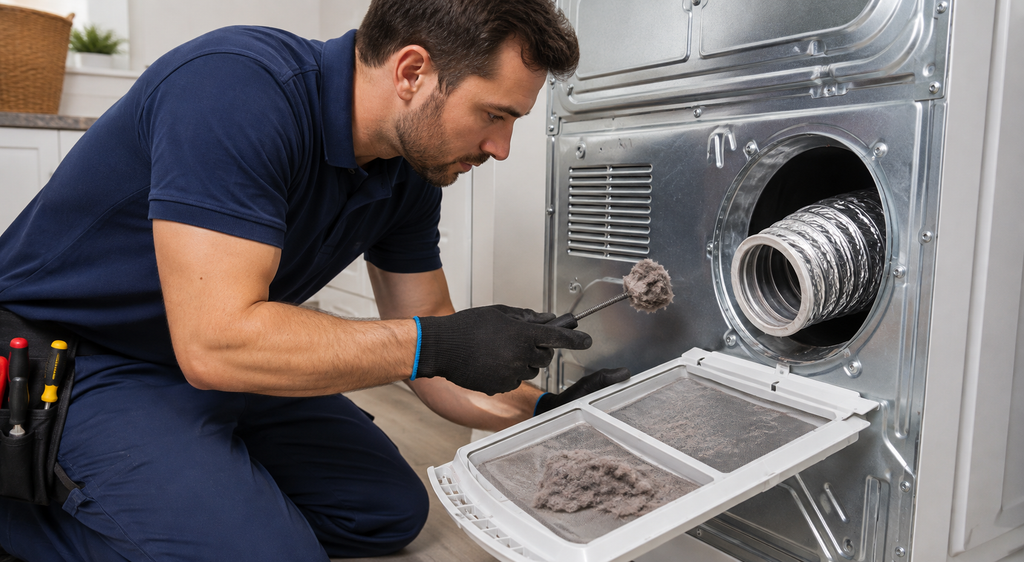
Dryer Maintenance Is Important To Prevent Fire Incidences. This is because lint accumulation may prevent adequate airflow.
The homeowner is advised to carry out inspections of the dryer venting system and check on abnormal heating.
Professional dryer vent cleaning may also be appropriate when airflow becomes restricted or when the exhaust system has accumulated significant lint.
Gas Dryer Safety
Gas dryers require proper gas connections and ventilation. Professional installation is especially important when a new gas line or connection is required.
Because gas combustion produces exhaust gases, appropriate venting and carbon monoxide safety measures should be considered according to the home’s configuration and local recommendations.
Should there be any indication that there is a gas leak within one’s premises, the matter needs to be dealt with as an urgent one. It is important that one does not tamper with the supply of gas.
Gas vs. Electric Dryer Comparison Cheat Sheet
| Feature | Gas Dryer | Electric Dryer |
| Upfront Cost | Often higher | Often lower |
| Operating Cost | Can be lower where gas is inexpensive | Depends on electricity rates |
| Drying Performance | Effective, fast heating | Reliable, consistent heating |
| Installation | More involved without an existing gas line | Easier with a compatible 240V setup |
| Energy Source | Natural gas/propane + electricity | Electricity |
| Best For | Homes with existing gas hookups | Homes with compatible electrical hookups |
| Heat Pump Option | Not typical | Available |
Final Verdict: Should a Homeowner Choose Gas or Electric?
There is no universal winner in the gas vs electric dryer debate. The better choice depends on the home’s existing infrastructure, installation budget, utility rates, laundry habits, and long-term plans.
A Gas Dryer May Make Sense If:
A gas model may be a practical choice when:
- The laundry room already has a compatible gas connection.
- Natural gas is relatively inexpensive in the area.
- The homeowner expects to remain in the property for several years.
- Professional gas installation is acceptable.
- Fast, effective gas heating is preferred.
An Electric Dryer May Be Better If:
An electric model may make more sense when:
- The home already has a compatible 240V dryer outlet.
- There is no existing gas connection.
- Installing a gas line would be expensive.
- The homeowner rents or lives in an apartment or condo.
- The household is pursuing electrification.
- Rooftop solar is available or planned.
- A heat pump dryer is being considered.
Conclusion
Choosing the right gas or electric dryer depends on the home’s existing hookup, installation requirements, energy costs, drying needs, and long-term budget. Instead of focusing only on the upfront price, homeowners should consider how the dryer will fit their daily laundry routine and overall home setup.
For those researching appliances online, using specific search terms can also make it easier to find the right products. While best hair dryers 2026 refers to personal-care appliances rather than clothes dryers, clear product research helps shoppers avoid confusion and compare suitable options.
For homeowners exploring different appliance choices, Mardeys can be a useful resource when comparing models, features, and configurations. Ultimately, the best dryer is the one that offers the right balance of performance, efficiency, installation requirements, and long-term value for the home.