


Choosing a bathroom vanity is about more than finding a style you like. The wrong height or depth can make a bathroom feel cramped, uncomfortable, or difficult to use.
So, how tall is a bathroom vanity?
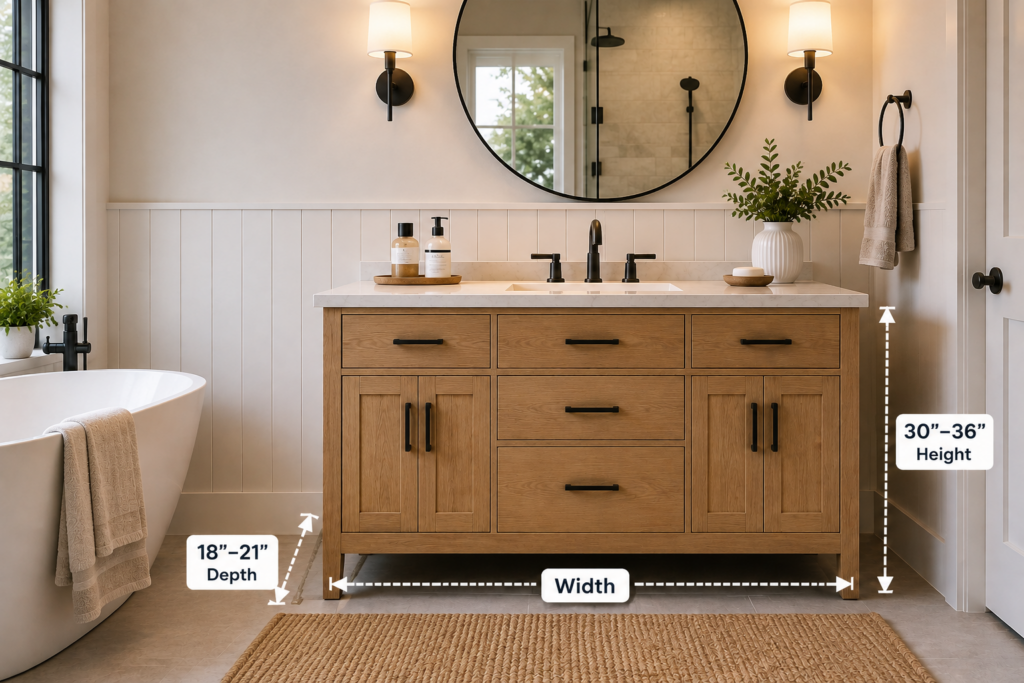
Most standard bathroom vanities are around 30 to 36 inches tall, although the right height depends on the vanity style, countertop, sink, and the people using the bathroom.
Before buying a vanity, it is worth understanding the standard dimensions and measuring your available space. This guide explains bathroom vanity height, depth, width, counter height, and the measurements that matter most when choosing a vanity for your home.
What Is the Standard Height of a Bathroom Vanity?
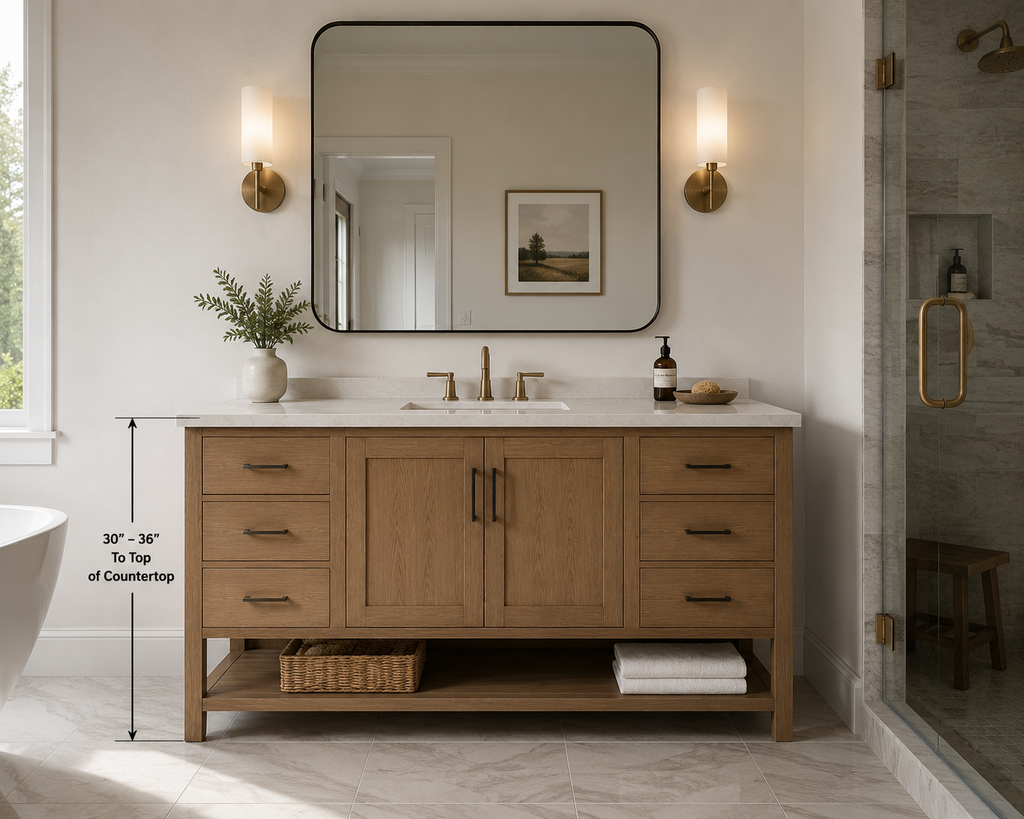
A standard bathroom vanity is typically 30 to 36 inches high, measured from the floor to the top of the countertop.
Traditional bathroom vanities were often around 30 to 32 inches tall. However, taller vanities have become increasingly common because they can provide a more comfortable height for adults when washing their hands, brushing their teeth, or getting ready.
The actual finished height can also change depending on the countertop and sink configuration. For example, a vanity cabinet may be 30 or 32 inches tall, while the countertop and an above-counter vessel sink add additional height.
Standard bathroom vanity height at a glance
| Vanity measurement | Typical range |
| Cabinet height | 30–34 inches |
| Finished vanity height | About 30–36 inches |
| Common vanity depth | 18–21 inches |
| Small vanity width | About 18–24 inches |
| Medium vanity width | About 30–36 inches |
These are general ranges rather than fixed requirements. Your bathroom layout and the type of vanity you choose should ultimately determine the dimensions that work best.
How Tall Should a Bathroom Vanity Be?
The best bathroom vanity height is the one that feels comfortable for the people who will use it most.
For many adults, a vanity with a finished height in the 32- to 36-inch range offers a comfortable balance between accessibility and everyday use. A lower vanity may be preferable in certain bathrooms, while a taller vanity can reduce the need to bend over.
If you are choosing a vanity for a shared family bathroom, consider the height of the people using it rather than choosing a size based only on appearance.
Consider the sink height, too
One common mistake is looking only at the cabinet height. The sink and countertop can significantly affect the final height.
For example, a vessel sink sits above the countertop, so a cabinet that looks appropriately sized on its own could become too high once the sink is installed.
If you are choosing a vanity with an integrated or undermount sink, the finished countertop height may be easier to predict.
What Are Standard Bathroom Vanity Dimensions?
Height is only one part of choosing the right vanity. You also need to consider width and depth.
Bathroom vanity dimensions vary considerably depending on the size of the bathroom and whether the vanity is designed for one or two sinks.
Common widths include:
- 18–24 inches: Suitable for compact bathrooms and powder rooms
- 30–36 inches: A popular choice for smaller full bathrooms
- 48 inches: Provides more counter and storage space
- 60 inches or more: Often used for larger bathrooms and double-sink layouts
There is no single standard vanity width that works for every bathroom.
The available wall space, door position, toilet location, shower or tub, and plumbing connections should all be considered before you buy.
How Deep Are Bathroom Cabinets?
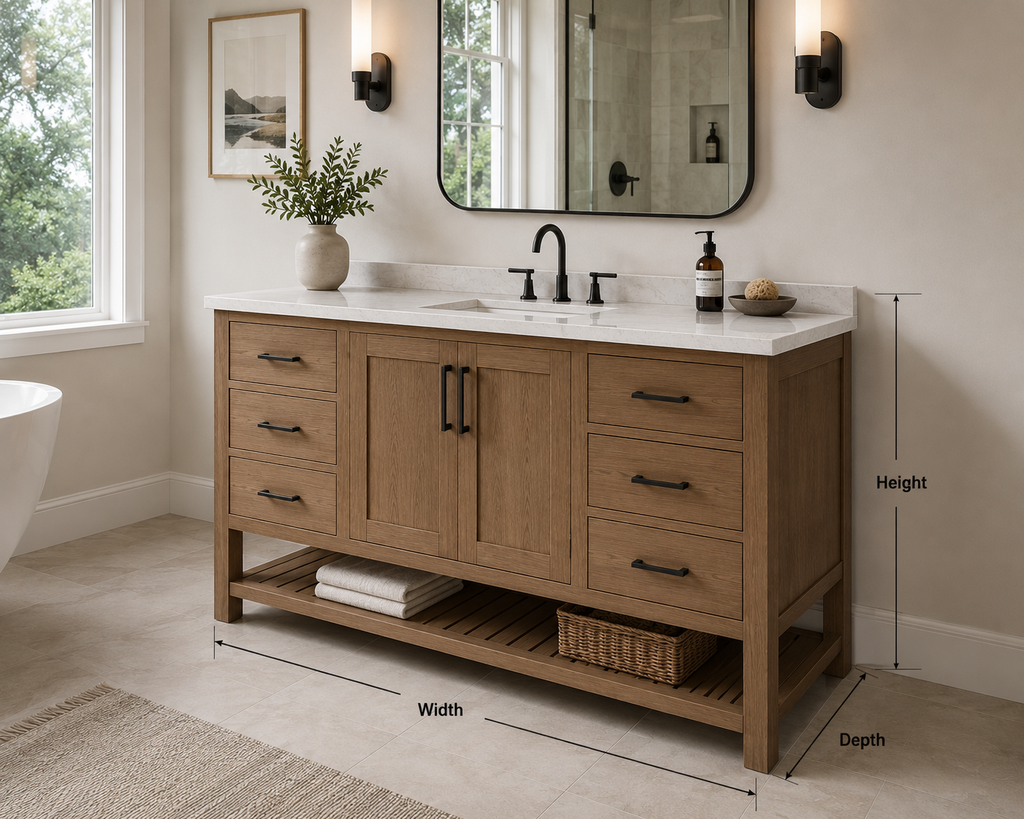
Most bathroom vanity cabinets are around 18 to 21 inches deep, although compact and custom options can be shallower.
Depth is particularly important in a small bathroom. A vanity that is too deep can reduce walking space and make the room feel crowded.
When measuring depth, don’t just measure the cabinet. Remember that the countertop may extend slightly beyond the cabinet, and handles or other hardware can also affect how much space the vanity occupies.
Choosing the right vanity depth
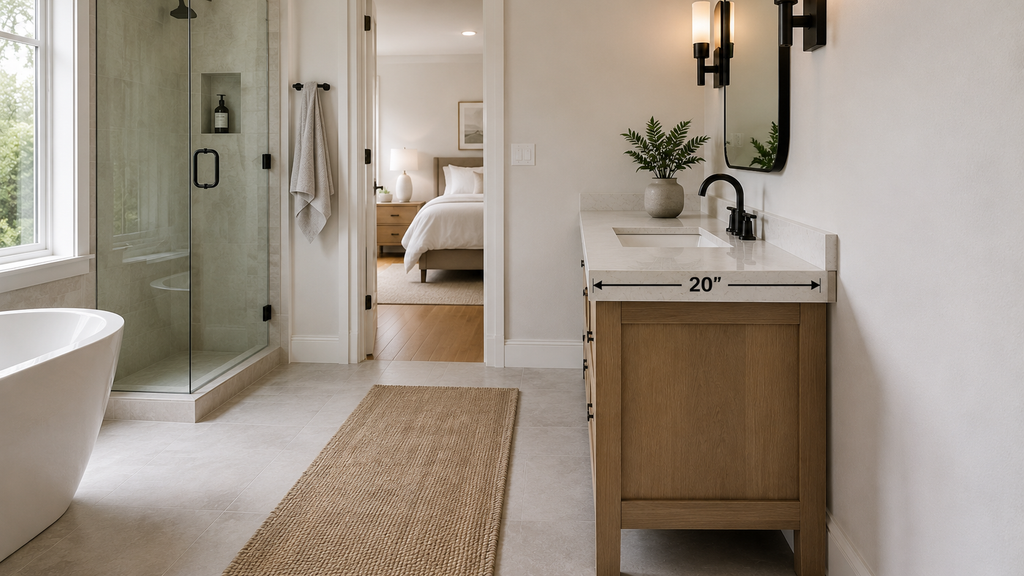
A deeper vanity can provide more storage and countertop space, but it also takes up more floor area.
For a compact bathroom, a shallower vanity may make the room easier to move around. In a larger bathroom, you may have enough space for a deeper cabinet without compromising comfort.
The goal is to find the best balance between storage, countertop space, and clearance.
What Is Standard Bathroom Counter Height?
Bathroom countertop height generally falls within the same overall range as vanity height, with around 32 to 36 inches being common for many modern bathrooms.
However, the finished counter height depends on several factors:
- Vanity cabinet height
- Countertop thickness
- Sink type
- Sink installation method
- User height
- Bathroom layout
An undermount or integrated sink generally does not add much height above the countertop. A vessel sink, on the other hand, sits on top of the counter and can make the finished washing surface considerably higher.
This is why it is important to think about the complete vanity and sink combination, rather than selecting the cabinet height in isolation.
Does Vanity Style Affect Height?
Yes. The type of bathroom vanity you choose can influence both its appearance and finished height.
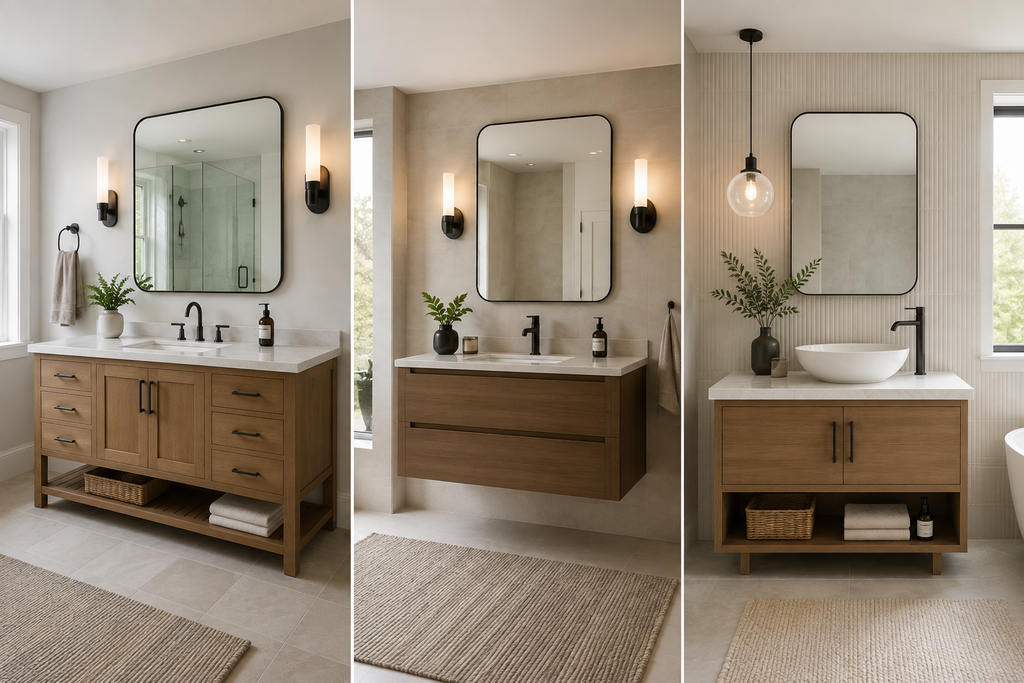
Freestanding vanities
Freestanding vanities sit directly on the floor and are available in a wide range of sizes. They are a versatile choice for many traditional and contemporary bathrooms.
Wall-mounted vanities
Wall-mounted or floating vanities are attached to the wall rather than sitting directly on the floor. One advantage is that you can have more flexibility over the installation height.
They can also make a small bathroom appear more open because the floor remains visible underneath.
Vessel sink vanities
With a vessel sink, the bowl sits above the countertop. The cabinet itself may have a conventional height, but the finished sink height can be significantly higher.
If you choose this style, calculate the height of the countertop plus the sink before installation.
How to Choose the Right Bathroom Vanity Size
Once you know the standard measurements, choosing a size becomes much easier.
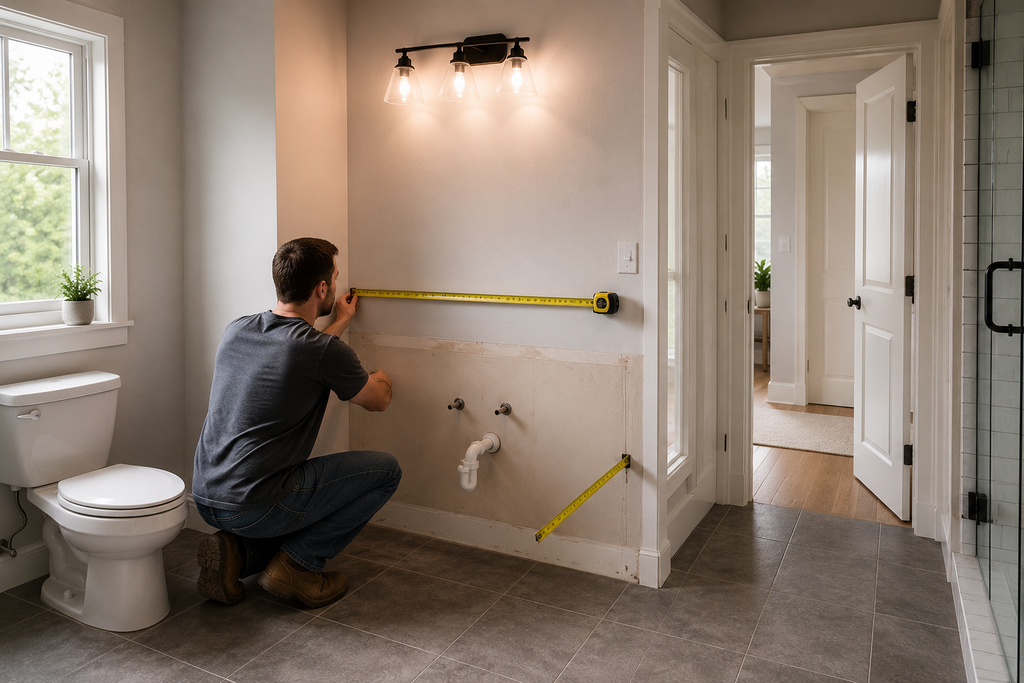
Start by measuring the wall where you want the vanity to go. Then consider how much room you need to open doors, move around the bathroom, and access nearby fixtures.
For a small bathroom
A compact vanity can provide essential storage without taking over the room.
Look at narrower widths and shallower depths, especially if the bathroom has limited floor space.
For a medium-sized bathroom
A 30- to 36-inch vanity can offer a useful combination of counter space and storage without requiring a large footprint.
For a larger bathroom
If you have enough wall and floor space, a wider vanity can provide additional storage and countertop space. Larger bathrooms may also accommodate double-sink configurations.
The important thing is not simply choosing the largest vanity that fits. Leave enough clearance around the vanity so the bathroom remains comfortable to use.
How to Measure for a Bathroom Vanity
Before ordering a new vanity, take a few basic measurements.
1. Measure the available wall width
Measure the entire wall and identify any areas that cannot be used because of doors, windows, outlets, or other fixtures.
2. Measure the available depth
Check how far the vanity can extend into the room without interfering with walkways or other bathroom fixtures.
3. Check plumbing locations
Your existing drain and water supply locations can affect installation. A vanity that looks perfect on paper may require additional plumbing work if its configuration differs significantly from your existing setup.
4. Measure door and drawer clearance
Make sure vanity doors and drawers can open fully without hitting the toilet, shower, tub, or bathroom door.
5. Consider the finished height
Don’t forget to account for the countertop and sink. This is particularly important when using a vessel sink.
Taking these measurements before shopping can help prevent an expensive sizing mistake.
Common Bathroom Vanity Sizing Mistakes to Avoid
Even a beautiful vanity can become frustrating if it does not fit the room properly.
Choosing based only on width: A vanity may fit the wall but still be too deep for comfortable movement.
Ignoring the countertop: The countertop can add to the overall depth and finished height.
Forgetting the sink: An above-counter vessel sink can substantially change the final height.
Not checking door clearance: Make sure nearby doors, drawers, and fixtures can all be used without interference.
Skipping plumbing measurements: Existing plumbing can affect which vanity configuration is easiest to install.
Buying before measuring: Always measure the space first and compare those measurements with the product specifications.
Should You Choose a 20-Inch or 30-Inch Bathroom Vanity?
The right size depends on how much space you have and how much storage you need.
A 20-inch bathroom vanity with a sink can be a practical option for a compact bathroom or powder room where floor space is limited.
A 30-inch bathroom vanity gives you more room for storage and countertop space while still working well in many smaller bathrooms.
Rather than choosing based only on the number of inches, consider the complete layout. A few extra inches of counter space may be worthwhile if the bathroom has enough clearance, while a smaller vanity may be the better choice when every inch matters.
Find the Right Bathroom Vanity for Your Space
Once you know the height, width, depth, and sink configuration you need, shopping becomes much easier. Mardey’s offers bathroom vanity options in different styles and configurations, making it easier to compare options based on your bathroom’s available space and needs.
Explore Mardey’s bathroom vanities to compare available styles and find an option that fits your bathroom.
Final Thoughts
So, how tall is a bathroom vanity? A typical bathroom vanity has a finished height of around 30 to 36 inches, but the ideal height depends on the cabinet, countertop, sink, and the people using the bathroom.
Before buying, measure more than just the wall width. Check the vanity’s height, depth, width, countertop thickness, sink configuration, plumbing, and surrounding clearance.
Getting these measurements right before you order can make the difference between a vanity that simply fits and one that feels comfortable and functional every day.
