


Choosing a bathroom faucet can seem like a simple task until you start looking at different styles, mounting configurations, sizes and handle options. A good faucet not only has to look good, but it has to fit your sink or vanity and work with your existing plumbing.
If you’re replacing an old faucet or finishing a new bathroom, knowing the basics before you buy can save you from compatibility issues and unnecessary installation work.
This guide will assist you to choose a bathroom faucet based on type, size, mounting configuration, sink compatibility, and installation requirements.
You’ll Start with Your Sink or Vanity
Before selecting a style, look at the sink or countertop where you’ll install the faucet. One of the most important things to check is the number and the spacing of the mounting holes.
Bathroom faucets are generally made for:
- Sink or countertop (one hole)
- Three-hole sink configuration, narrow
- Wider spaced three-hole sinks
- Installations on the wall
If you’re replacing an existing faucet, seeing what the current hole setup is can make the buying process a lot easier.
Check the number of holes for faucets
Usually, a single-hole faucet needs one hole for the faucet body. Some models are designed to cover additional holes with a deck plate depending on the installation setup.
A centerset faucet is suitable for a small three-hole sink, and a widespread faucet has separate pieces and requires extra room between handles and the spout.
Tips: Don’t pick a tap just because it looks good. Before ordering, take measurements of the existing installation.
Learn the Main Types of Bathroom Faucets
Once you know your sink configuration, you can narrow down the faucet type that works best for your bathroom.
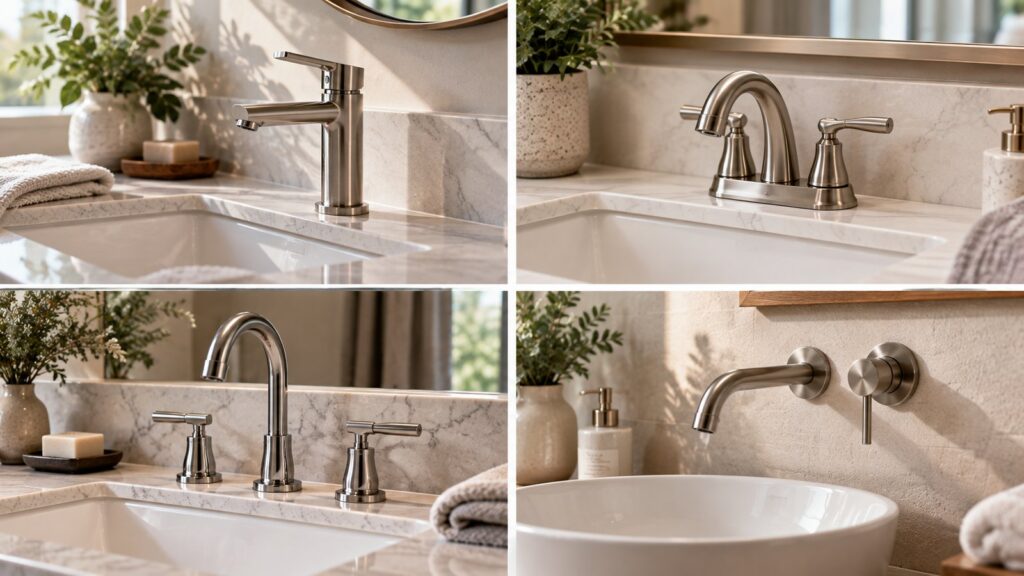
Single-Handle Bathroom Faucet
Once you know your sink configuration, you can narrow down the type of faucet that will work best for your bathroom.
This design is popular because it is simple to operate and usually has a clean, streamlined appearance. You can adjust the temperature and flow with one hand, which can be especially convenient for everyday use.
A single-handle faucet can be a good choice if you want:
- Temperature and flow control made simpleModern, clean lookOne-handed operation is easy
- A less visually cluttered vanity
But be sure that the faucet mounting configuration will work for your sink or countertop.
Double-Handle Bathroom Faucet
A two handle bathroom faucet has two handles that control hot and cold water.
This traditional layout can work particularly well in bathrooms with classic, transitional or traditional designs. It also allows you to control the hot and cold water supplies independently.
Or if you want you can opt for a double-handle faucet:
- Isolated hot/cold controls
- The traditional faucet look
- More accurate temperature setting
- A timeless style of vanity
You’ll need specific mounting locations for the handles and spout, so check the sink’s hole configuration and spacing before you buy.
Single-Hole Bathroom Faucet
A single-hole bathroom faucet is made to be installed through one mounting hole.
This style offers a clean countertop look and is standard for modern bathroom vanities and sinks for single-hole installation.
- It can be a good choice when:
- Your sink has a single hole for the faucet
- You want that minimalist look
- You are installing a new vanity that is a single hole configuration
- You want a compact faucet arrangement
For existing sinks with multiple holes, be sure the faucet has or is compatible with a deck plate before assuming it will fit.
How to Choose the Right Bathroom Faucet Size
Faucet size is more than just whether the faucet physically fits the countertop. The spout also has to be in the right place above the sink.
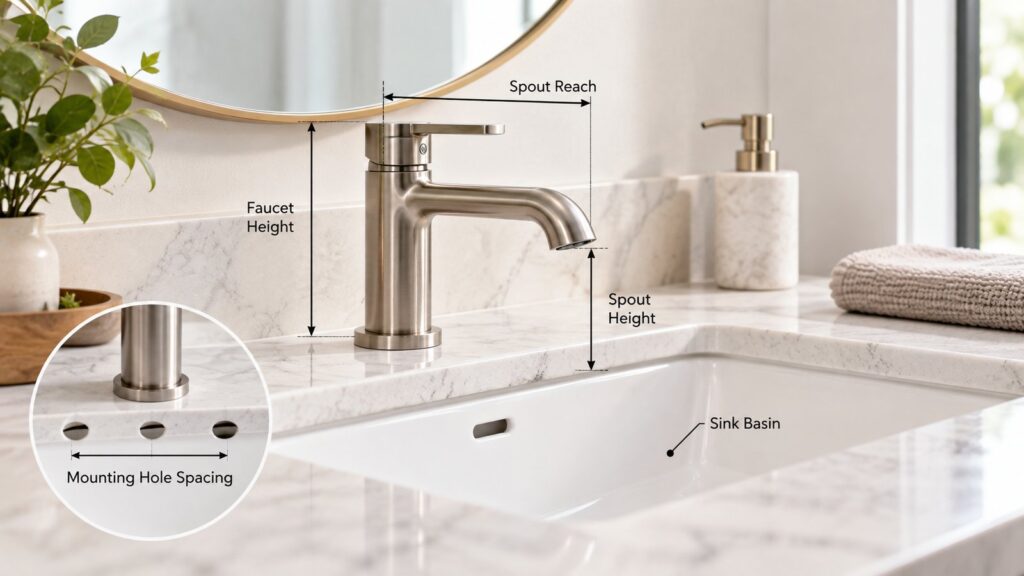
Be aware of four measurements:
Height of the Faucet
Faucet height is the vertical distance from the mounting surface to the highest point of the faucet.
A taller faucet will give you a more dramatic look and may give you more clearance but it should still work with the sink and any mirror, cabinet or shelf nearby.
Get to Spud
Spout reach is the horizontal distance the faucet extends over the sink.
If the spout is too short, the water may hit too close to the back of the basin. If it is too long, water might drop too near the front edge.
The idea is to place the water flow comfortably in the basin.
Height of Spout
The amount of room you’ll have to wash your hands will depend on the distance between the sink surface and the faucet outlet.
A taller spout may give more clearance, but so does the size of the sink basin. If the basin is shallow and the spout high, there could be more splashing.
Mounting Hole Spacing
For a multi-hole faucet, measure the distance between holes where you will be mounting the faucet.
This is especially important if you are replacing an existing faucet. Even if the faucet appears to be the right style, it may not fit if the hole spacing is wrong .
Choose the Right Faucet Mounting Style
Bathroom faucets are available in several mounting configurations. Your sink or vanity will usually determine which options are possible.
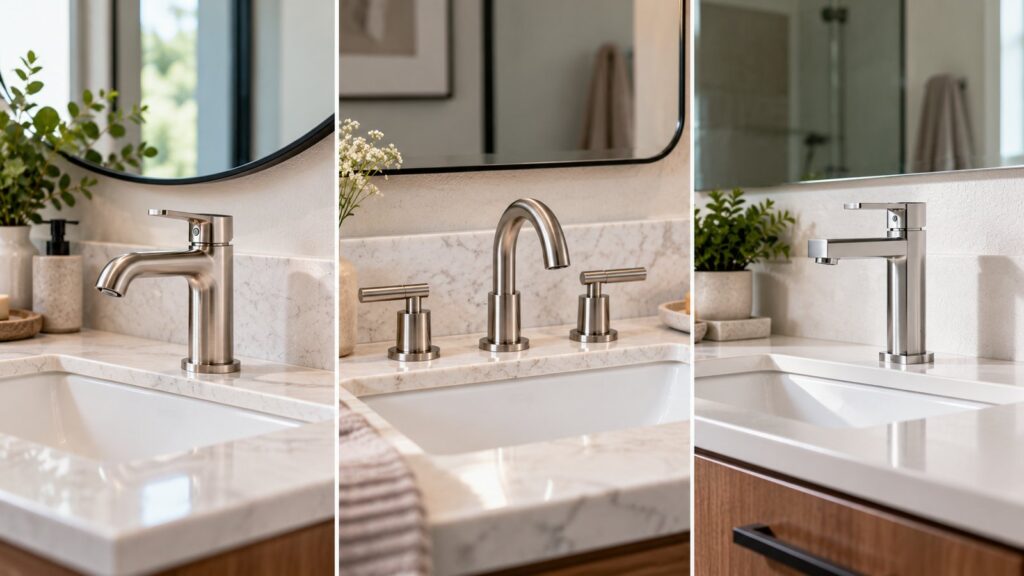
Deck-Mounted Faucet
A deck-mounted faucet sits directly on the sink or countertop.
This is one of the most common arrangements for bathroom vanities and is available in several configurations, including single-hole, centerset, and widespread designs.
Centerset Faucet
A centerset faucet combines the spout and handles into a compact configuration designed for a three-hole sink.
It’s a practical choice when you want a traditional three-hole installation without the wider appearance of separate widespread components.
Widespread Faucet
A widespread faucet has separate handles and a separate spout.
Because the components are installed independently, widespread faucets offer more flexibility in positioning and can create a more customized appearance.
They typically require a countertop or sink designed to accommodate the necessary mounting holes.
Wall-Mounted Faucet
A wall-mounted faucet is installed on the wall behind the sink rather than directly on the countertop.
This configuration can create a distinctive, modern look and can help keep the countertop visually cleaner. However, wall-mounted faucets require compatible plumbing inside the wall, so they are generally more involved than replacing a standard deck-mounted faucet.
Bathroom Faucet vs. Bathtub Faucet
It’s important to distinguish between a sink faucet and a bathtub faucet.
A bathroom sink faucet is designed for a lavatory or vanity sink. A bathtub faucet or tub filler is designed to deliver water into a bathtub and typically has different flow and installation requirements.
These faucets aren’t simply interchangeable based on appearance.
When shopping, consider:
- Where the faucet will be installed
- Required water flow
- Spout length
- Mounting configuration
- Existing plumbing
- Manufacturer installation requirements
If you’re replacing a faucet on a vanity, look specifically for a sink faucet rather than choosing a bathtub faucet simply because you like its design.
What to Measure Before Buying a Bathroom Faucet
Taking a few measurements before shopping can prevent many common installation problems.
Check:
1. Number of holes
Count the existing faucet mounting holes.
2. Hole spacing
Measure between the centers of the holes for multi-hole installations.
3. Countertop or sink thickness
Make sure the faucet mounting hardware can accommodate the installation surface.
4. Spout reach
Estimate where the water stream needs to land inside the basin.
5. Available height
Check clearance around mirrors, medicine cabinets, shelves, and other fixtures.
6. Plumbing connections
Confirm that the faucet’s water connections are compatible with your existing setup.
A few minutes of measuring can be much easier than discovering after delivery that the faucet doesn’t fit.
Bathroom Faucet Installation: What to Expect
The installation process varies depending on the faucet type and existing plumbing, but a typical replacement generally involves several basic steps.
1. Shut Off the Water
Turn off the hot and cold water supplies before removing the existing faucet.
2. Remove the Old Faucet
Disconnect the water supply lines and remove the mounting hardware holding the existing faucet in place.
3. Clean the Mounting Surface
Remove old sealant, mineral buildup, and debris so the new faucet can sit properly against the sink or countertop.
4. Position the New Faucet
Place the faucet through the appropriate mounting hole or holes according to the manufacturer’s instructions.
5. Secure the Faucet
Install and tighten the supplied mounting hardware. Avoid overtightening, which can potentially damage components or the mounting surface.
6. Connect the Water Supply
Connect the hot and cold water lines as directed by the manufacturer.
7. Turn the Water Back On
Slowly reopen the water supply and check all connections for leaks.
8. Test the Faucet
Run both hot and cold water and check the water flow, temperature control, and drain area for any signs of leakage.
For a straightforward faucet replacement, an experienced homeowner may be comfortable handling the installation. If the plumbing needs to be modified, connections are badly corroded, or access is difficult, hiring a licensed plumber can be the safer choice.
Which Bathroom Faucet Is Right for You?
The best faucet depends on your sink configuration, bathroom style, and how you want to use the space.
| If you want… | Consider… |
| Simple one-handed operation | Single-handle faucet |
| Separate hot and cold controls | Double-handle faucet |
| A clean, minimalist look | Single-hole faucet |
| A compact three-hole configuration | Centerset faucet |
| A more customized appearance | Widespread faucet |
| A clean countertop with a specialty installation | Wall-mounted faucet |
The most important point is to choose the faucet after checking your sink and installation requirements, not simply based on the finish or style.
Bathroom Faucet Buying Checklist
Before purchasing, run through this checklist:
- What type of faucet do I need?
- How many faucet holes does my sink have?
- What is the hole spacing?
- What faucet height will work?
- Is the spout reach appropriate for my basin?
- Will the faucet clear my backsplash or other fixtures?
- Is the mounting style compatible?
- Are the water connections compatible?
- Do I need a deck plate or additional hardware?
- Can I install it myself, or should I hire a plumber?
- Does the faucet’s style and finish work with the rest of the bathroom?
Final Thoughts
Starting with compatibility and not looks makes choosing a bathroom faucet much easier. Start by determining the hole configuration of your sink. Then compare faucet types, mounting styles, height, spout reach and installation requirements.
When you are considering a single handle bathroom faucet, double handle bathroom faucet or single hole bathroom faucet, the right choice should match both the design of your bathroom and your existing installation.
Take measurements first, weigh your options and pick a faucet that will work with your sink, vanity and plumbing set-up. This will help you avoid costly returns and make your bathroom renovation go much more smoothly.
