


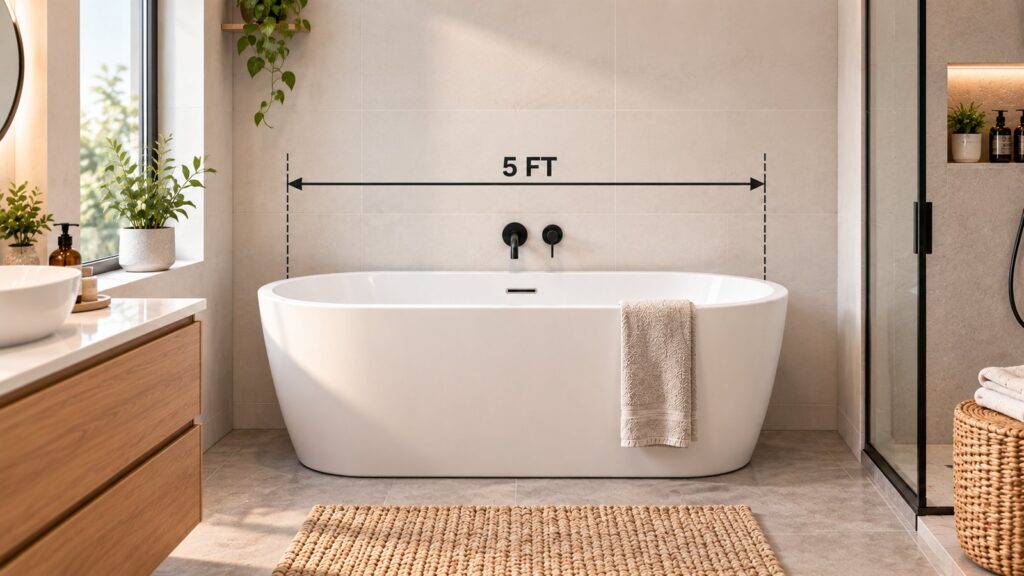
If your bathroom wall is 5 feet long, you’re probably wondering what size bathtub will fit without wasting space or causing installation problems.
The most common starting point for a 5-foot wall in most standard bathroom layouts is a 60 inch bathtub (5 feet long). But that doesn’t mean every tub labelled “60 inches” will fit exactly the same way.
The actual dimensions of the bathtub, the width of the alcove, wall construction, tub surround, and installation requirements can all influence the final fit.
This guide will assist you to understand what size bathtub will generally fit a 5-foot bathroom wall, how 60-inch tubs are measured, what to look for before purchasing and how to be sure your new tub will work with your space.
Short answer: A 60-inch tub is designed to fit in a 5-foot bathroom alcove. But always measure your actual space and check specs from the manufacturer before buying.
How Big Is a 5 Foot Wall Bathtub?
If your bathroom wall is about 5 feet, then a 60 inch bathtub is usually the standard size.
Because,
5 ft = 60 inches
A 60-inch tub is usually used for standard three-wall alcove installations.
But one should not take the space available just by the length of the wall. Your bathroom may be a few inches off because of drywall, tile, framing, plumbing, or an existing tub surround.## A 5-foot wall doesn’t mean you always have exactly 60 inches of usable space
For example, measuring from finished surface of one wall to finished surface of opposite wall, you might get slightly less than 60 inches.
That’s why it’s important to measure the actual installation opening and not just the overall bathroom dimensions.
Expert Tips: Take a few measurements around the wall. Older homes and remodelled bathrooms aren’t perfect squares, and even a small difference can matter when you’re putting a tub between two walls.
Standard 60 inch Bathtub Dimensions
A standard 60 inch bathtub generally measures about:
| Dimension | Typical Measurement |
| Length | 60 inches |
| Width | Approximately 30–32 inches |
| Height | Approximately 18–22 inches |
| Installation style | Often alcove |
These measurements are general recommendations, not universal specifications. That can vary from manufacturer to manufacturer and style of tub to style of tub.
For instance, one 60-inch tub might be narrower than another and a deeper soaking tub might be taller overall.
The significance of bathtub sizes
Length isn’t the only thing to look at when shopping for a bathtub.
You should also verify:
- Total Width
- Total height
- Depth of inside soaking
- Drain position Location of tap Apron size
- Framing required
- Surround size
- Requirements for Installation
You can advertize two tubs as 60-inch bathtubs but they can have different widths, depths and installation requirements.
Is a 60 inch tub too big for a 5 foot wall?
Usually yes, especially if the space was constructed as a standard bathtub alcove.
A common size is a 60 inch tub for a 3 wall configuration with the tub running wall to wall.
The important thing is that 60 inches is the nominal length of the tub and the actual product dimensions may vary a bit.
Check out before you buy:
Available area wall to wall
using
Overall tub dimensions as per manufacturer specifications
Don’t Forget the Tub Surround
If you are installing a tub surround, tile or other wall finish, consider how the materials will affect the amount of space available.
A bathtub might fit the rough opening, but it will cause problems when the finished walls are installed.
Tips: If you’re replacing an existing tub, measure the existing opening before you remove anything. Measure the finished surfaces and check the manufacturer’s installation requirements for the replacement tub.
How to Measure a 5-Foot Bathroom Wall for a Bathtub
Take some time and measure the space carefully before you purchase a bathtub.
1. Measure the wall from wall to wall
Measure the distance between the two finished walls where the tub will be placed.
Do not depend on the original plans for construction or assume the opening is exactly 60 inches.
2. Compute the available width
Measure from the back wall to the front of the tub space.
This helps you know if a standard 30- or 32-inch wide bathtub will fit.
3. Height check
Determine the available vertical space and think about:
* Window positions
* Current plumbing Height of tub surround
* Shower head placement
4. Verify the drain location
The tub drain layout must be compatible with your current plumbing, or planned plumbing changes.
5. Verify dimensions from manufacturer
This is among the most important steps.
Don’t buy a tub just because the product title has 60 in. Refer to manufacturer’s spec sheet for true overall dimensions and installation requirements.
Best Bathtub for 5 Foot Wall?
An alcove tub is often the best option for a typical 5-foot bathroom wall.
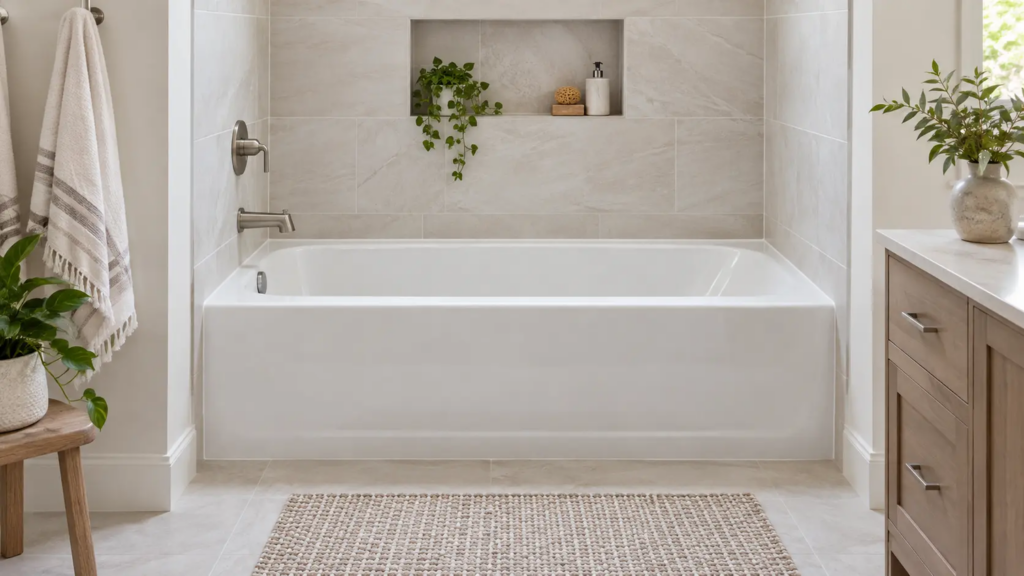
An alcove tub is designed to fit into a three-wall alcove, and it is a popular choice for standard bathrooms and bathroom remodels.
Bath of Alcove
Best for: Small bathroom designs and space-efficient installations.
Advantages
- Wedged tightly between 3 walls
- Compatible with shower combinations
- Smart use of bathroom space
- Lots of 60-inch choices
- Often easier to integrate into a remodel
Free Standing Bathtub
Best for: Larger bathrooms that have space around the tub.
A freestanding tub typically requires open floor space around it and is not an automatic substitute for a traditional 60-inch alcove tub.
Tub-shower combo
Best for: Custom bathroom designs with a planned platform or surrounding deck.
A drop-in tub can provide a different look however the space for installation and framing requirements are different than a standard alcove installation.
Bottom line: For a standard 5-foot wall and a three-wall bathtub opening, a 60-inch alcove bathtub is typically the easiest place to start.
60-Inch Bathtub or Smaller Bathtub
What if you don’t have a full 60 inches of space to work with?
Don’t try to cram a 60-inch tub into a space that wasn’t built for it.
If you have: a smaller tub might be better
- Your completed opening is under 60 inches
- The walls are not square Odd framing you got
- Plumbing restricts your choices
- Extra installation space will be required
The biggest bathtub isn’t always the right one to cram in. It’s the one that fits the real space and installation requirements while still giving you the bathing experience you want.
What You Need to Know Before You Buy a 60-Inch Bathtub
Please check below important measurements and requirements before you order.
Dimensions (LxWxH)
Check the actual length, width, and height of the tub.
Interior Sizes
A larger outside doesn’t always mean a larger bathing area. If comfort is important, check the interior basin dimensions and soaking depth.
Drain position
Make sure the drain configuration works for your existing plumbing or your remodel plans.
Where to put the tap and shower
Verify that the tub will be compatible with the tap and shower you want to install.## Wall surround
If you’re using a surround, make sure it’s the right size for your tub and the way you’re installing it.
Clearance at bathroom door
Don’t forget the path to the toilet
If hallways or doorways are too narrow, it might be hard to get a bathtub that fits the alcove into the room.
Expert Tip: Don’t just measure the bathroom. Measure the entire delivery path. Make sure to check doorways, hallways, stairs and corners before ordering a large bathtub.
What Not to Do When Purchasing a Bathtub for a 5-Foot Wall
Mistake 1 – Thinking all 60 inch tubs are the same
The term “60-inch bathtub” refers to the nominal length, although other dimensions may vary.
Mistake 2: Measuring Only The Old Bathtub
Your current tub can be a good starting point, but check the actual opening and plumbing before you buy a replacement.
Mistake 3: Not accounting for thickness of finished wall
The actual available space can be affected by tile, backer board, plasterboard and other finishes.
Mistake 4: Forgetting to Consider Drain Location
A tub that physically fits might need plumbing mods if the drain location doesn’t match.
Mistake 5: Choosing based on exterior dimensions alone
Don’t just look at the outside dimensions of the tub, think about the interior bathing space, the soaking depth and the comfort.
What If Your 5 Foot Wall Isn’t Exactly 60 Inches?
This is common, especially in older homes and in renovated bathrooms.
If your opening is slightly different than 60 inches, don’t assume you need to re-do the entire bathroom layout.
Find first:
1. The exact finished measurement wall to wall
2. Square walls, if
3. Requires installation opening
4. Real measurements of the bathtub
5. Installation tolerance allowed by the manufacturer
Then pick a bathtub based on the manufacturer’s specifications than the size of the product as advertised.
How to Select the Perfect Bathtub for Your Bathroom
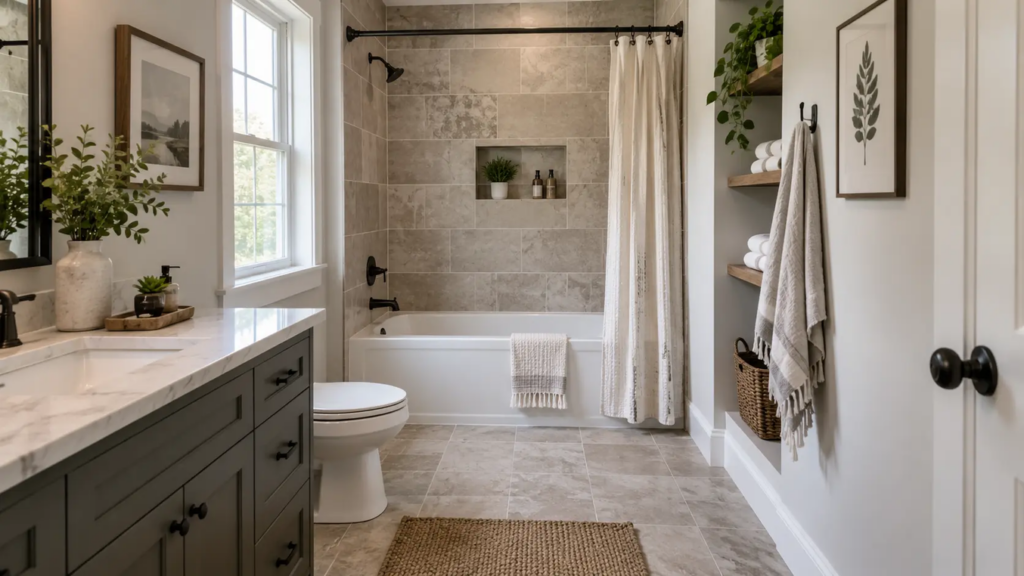
60-inch bathtub – The most common option for most standard US bathrooms with a 5-foot bathtub alcove.
But the best choice depends on more than length alone.
Consider your:
- Space available
- Bathroom design
- Desired soak depth.
- Width of tub
- Location of drain Shower specifications Tub surround
- Installation process
- Financial
- Access for delivery
If you are replacing an old tub, measure the space that is currently there first. If you’re remodelling an entire bathroom, plan the tub size with the vanity, toilet, shower and door clearance in mind.
Finish Your Bathroom Remodel
Once you have chosen the right bathtub, think about the other fixtures that will complement your bathroom design.
You may also like to check out:
- Bathroom vanities
- Bathtub faucets
- Tub surrounds
- Bathroom sinks
- Bathroom fixtures
Buying other related products at the same time can help you to achieve a cohesive look in your bathroom, and make sure everything is compatible before installation.
Shop Mardey’s bathroom products to compare bathroom choices for your remodel:
Final Takeaway
If you have a standard 5-foot bathroom wall, a 60-inch bathtub is usually the first size to consider. It’s a common fit for standard US alcove bathrooms and can provide a practical combination of bathing space and efficient use of the room.
But don’t stop at the “60-inch” label. Measure your actual wall-to-wall opening, check the tub’s complete dimensions, consider the surround and plumbing, and verify the manufacturer’s installation requirements.
The right bathtub is the one that fits your actual bathroom, not simply the one that has the right number in its product name.
