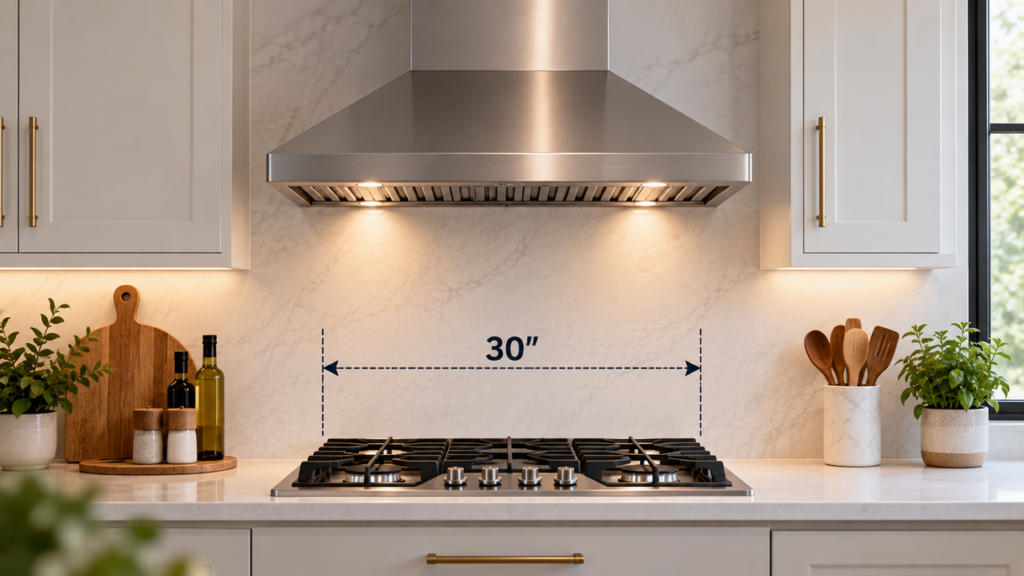
If you have a 30-inch cooktop, a 30-inch range hood is the most direct width match. But that doesn’t necessarily mean it’s your only option.
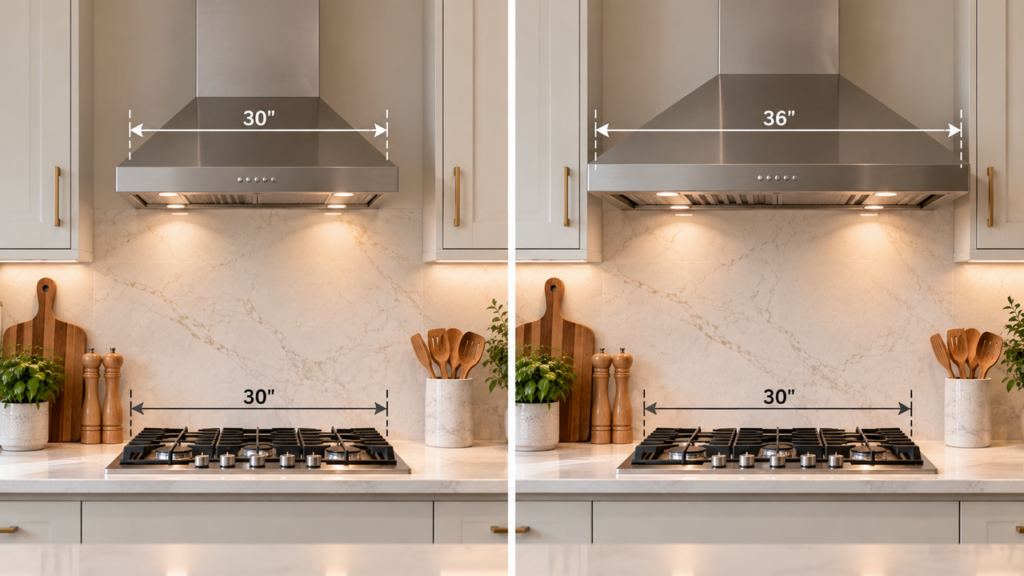
A 36-inch range hood can also work with a 30-inch cooktop and may provide additional coverage for smoke, steam, grease, and cooking odors. The right choice depends on your kitchen layout, hood type, available space, cooking habits, and the manufacturer’s installation requirements.
Before buying a range hood, here’s what you should know about matching hood width to a 30-inch cooktop.
Quick Answer: What Size Range Hood Do You Need for a 30-Inch Cooktop?
For most standard installations, a 30-inch range hood is the minimum width that matches a 30-inch cooktop.
However, if your kitchen has enough space, a 36-inch hood can provide more coverage around the cooking surface.
| Cooktop Width | Common Hood Width | Best For |
| 30 inches | 30 inches | Standard, space-conscious installation |
| 30 inches | 36 inches | Extra coverage and a larger visual presence |
| 30 inches | 42+ inches | Usually unnecessary unless specifically required by the kitchen design or appliance |
The important point is that hood width is only one part of choosing the right ventilation system. You also need to consider hood depth, CFM, mounting type, ducting, and the manufacturer’s required clearances.
Does a Range Hood Have to Be the Same Width as the Cooktop?
No. A range hood does not always have to be exactly the same width as the cooktop.
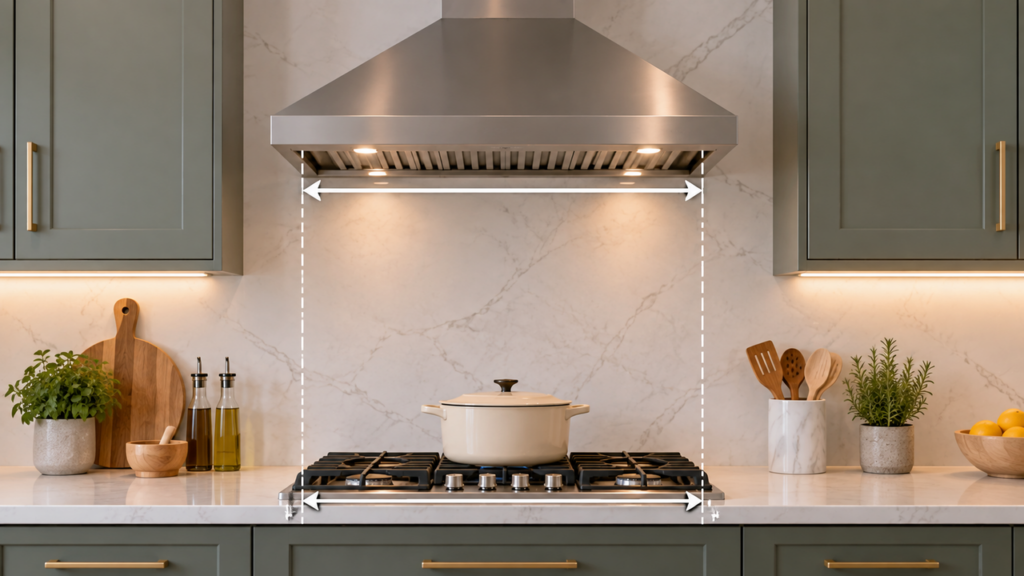
A 30-inch hood provides a straightforward one-to-one match with a 30-inch cooktop. But going wider can increase the area over which the hood can capture cooking byproducts.
For example, imagine a 30-inch cooktop with burners spread across its surface. A 30-inch hood covers the same nominal width. A 36-inch hood extends farther beyond the cooktop on each side, giving you additional coverage.
That extra width can be useful if you frequently:
- Cook at high heat
- Fry or sauté
- Use multiple burners at once
- Generate a lot of steam
- Cook foods with strong odors
- Have enough wall or cabinet space for a wider hood
Still, wider isn’t automatically better for every kitchen. Your hood should be selected based on the complete installation, not width alone.
30-Inch vs. 36-Inch Range Hood for a 30-Inch Cooktop
If you’re deciding between these two sizes, think about what matters most in your kitchen.
30-Inch Range Hood
A 30-inch hood is the natural choice when you want the hood and cooktop to have matching widths.
It’s a good option when:
- Your kitchen has limited space
- Your cabinetry is designed around a 30-inch opening
- You want a proportional, streamlined appearance
- Your cooking needs are relatively moderate
- You prefer a straightforward installation
For many standard kitchens, this is all the hood width you need.
36-Inch Range Hood
A 36-inch hood gives you approximately 3 inches of additional width on each side of a centered 30-inch cooktop.
That doesn’t automatically make it more powerful, but the larger capture area can be beneficial depending on the hood’s design and installation.
Consider a 36-inch hood when:
- You have enough available space
- You frequently cook with high heat
- You want additional coverage around the cooktop
- You prefer the look of a larger statement hood
- Your kitchen design can accommodate the wider appliance
Before choosing one, make sure the cabinet, wall, ductwork, and installation area can accommodate the larger width.
Why Hood Width Matters
Cooking produces more than just visible smoke.
Heat, grease particles, steam, and cooking odors can rise from the cooking surface and spread outward as they move upward. A range hood is designed to capture and remove these airborne byproducts.
The hood’s position and capture area therefore matter.
A hood that is too narrow for the application may provide less coverage around the edges of the cooking surface. A properly sized hood, combined with appropriate ventilation capacity and installation, can help keep the kitchen more comfortable and reduce the buildup of cooking residue.
That’s why choosing a range hood shouldn’t be based on width alone.
What Other Range Hood Dimensions Should You Check?
Before ordering a hood for your 30-inch cooktop, check more than the advertised width.
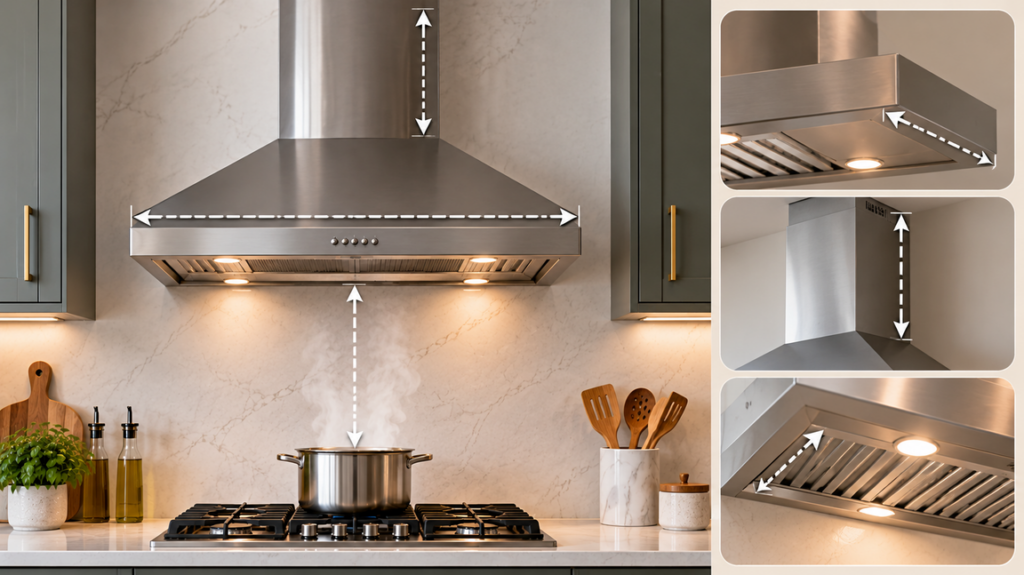
1. Width
Start with the width of your cooktop and the space available for the hood.
A 30-inch cooktop commonly pairs with a 30-inch hood, while a 36-inch hood may be an option when additional coverage and installation space are available.
2. Depth
The hood needs enough depth to provide appropriate coverage over the cooking surface.
Don’t assume that two hoods with the same width will provide the same amount of coverage. Hood depth can vary significantly between models and styles.
3. Mounting Type
Your installation type affects which hood dimensions will work.
Common options include:
- Under-cabinet hoods: installed beneath a cabinet
- Wall-mount chimney hoods: mounted directly against the wall
- Island hoods: suspended above a cooktop located on an island
- Range hood inserts: installed inside a custom hood structure
A 30-inch cooktop can be paired with different hood types, but each installation has its own space and clearance considerations.
4. CFM
CFM stands for cubic feet per minute and describes the volume of air the ventilation system can move.
A higher CFM rating isn’t automatically the best choice. The appropriate ventilation capacity depends on factors such as your cooktop, cooking habits, hood design, ductwork, and local installation requirements.
For gas cooking in particular, follow the hood and cooktop manufacturer’s specifications and applicable local codes.
5. Ducting
A ducted hood vents air outside the home, while a recirculating or ductless hood filters air and returns it to the kitchen.
If you’re replacing an existing hood, check how the current ventilation is configured before purchasing.
Changing from ductless to ducted can involve significantly more installation work.
What If Your Cabinet Space Is Only 30 Inches?
If you have a 30-inch-wide opening specifically designed for the hood, a 30-inch model is generally the simplest choice.
Don’t assume a 36-inch hood will fit simply because your cooktop is 30 inches wide.
Measure the actual opening and surrounding cabinets first.
You should also check:
- Cabinet width
- Wall space
- Hood depth
- Duct location
- Electrical connection
- Required clearance above the cooktop
- Manufacturer installation instructions
The manufacturer’s specifications should take priority over a general sizing rule.
How High Should a Range Hood Be Above a 30-Inch Cooktop?
Hood height is another important part of the installation.
The appropriate clearance depends on the type of cooktop, hood design, and manufacturer specifications. Gas and electric cooking appliances may have different requirements, and local codes can also apply.
Rather than relying on a universal measurement, check the installation manuals for both your cooktop and range hood before mounting the hood.
Installing the hood at the wrong height can affect performance and may create a safety issue.
Which Is Better: A 30-Inch or 36-Inch Hood?
There’s no single answer for every kitchen.
Choose a 30-inch hood if:
- You want a direct width match
- Cabinet space is limited
- You have a standard 30-inch installation area
- You prefer a compact appearance
- Your cooking needs don’t require additional coverage
Consider a 36-inch hood if:
- You have sufficient space
- You cook frequently at high heat
- You want additional coverage around the cooktop
- Your kitchen design supports the larger hood
- The manufacturer’s specifications allow the installation
The goal isn’t to buy the largest hood possible. It’s to choose a hood that fits your kitchen and provides appropriate ventilation for the way you cook.
Range Hood Buying Checklist for a 30-Inch Cooktop
Before placing your order, check these items:
☐ Cooktop width: 30 inches
☐ Hood width: 30 inches minimum match; consider 36 inches when appropriate
☐ Hood depth: Verify coverage and installation dimensions
☐ Mounting type: Under-cabinet, wall, island, or insert
☐ CFM: Appropriate for your cooktop and cooking habits
☐ Ducting: Ducted or ductless
☐ Clearance: Follow both appliance manufacturers’ requirements
☐ Cabinet/wall space: Confirm the hood physically fits
☐ Electrical requirements: Verify before installation
☐ Installation instructions: Review before purchasing
The Bottom Line
For a 30-inch cooktop, a 30-inch range hood is the straightforward size match. If you have enough space and want additional coverage, a 36-inch hood can also be a practical choice.
But don’t choose based on width alone. Hood depth, ventilation capacity, mounting style, ducting, available space, and manufacturer clearance requirements all affect whether a particular model is right for your kitchen.
If you’re replacing an existing hood, measure your installation space first and compare those measurements with the hood’s specifications before ordering.