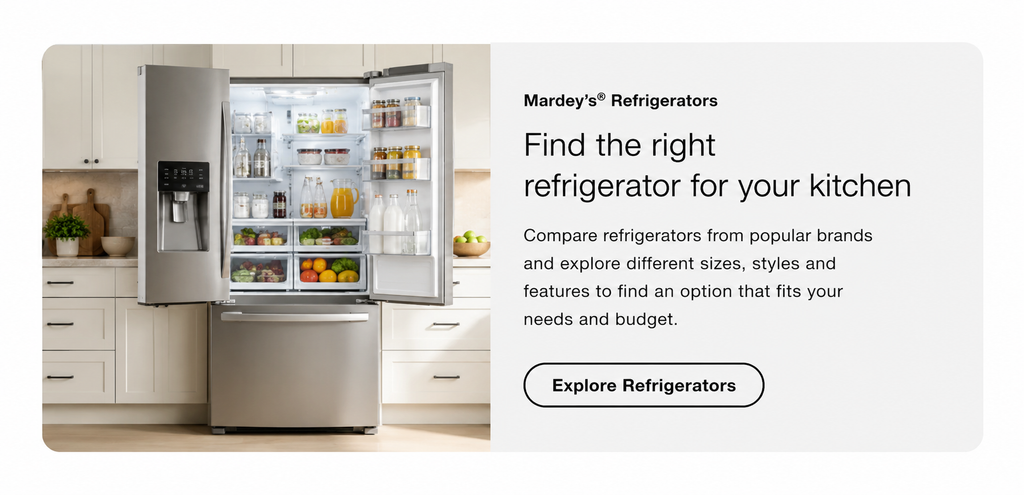
Choosing a refrigerators with ice makers and water dispensers sounds simple until you start comparing models. Capacity, dispenser design, filtration, ice options, energy use, smart features, and price can all change which refrigerator makes sense for your home.
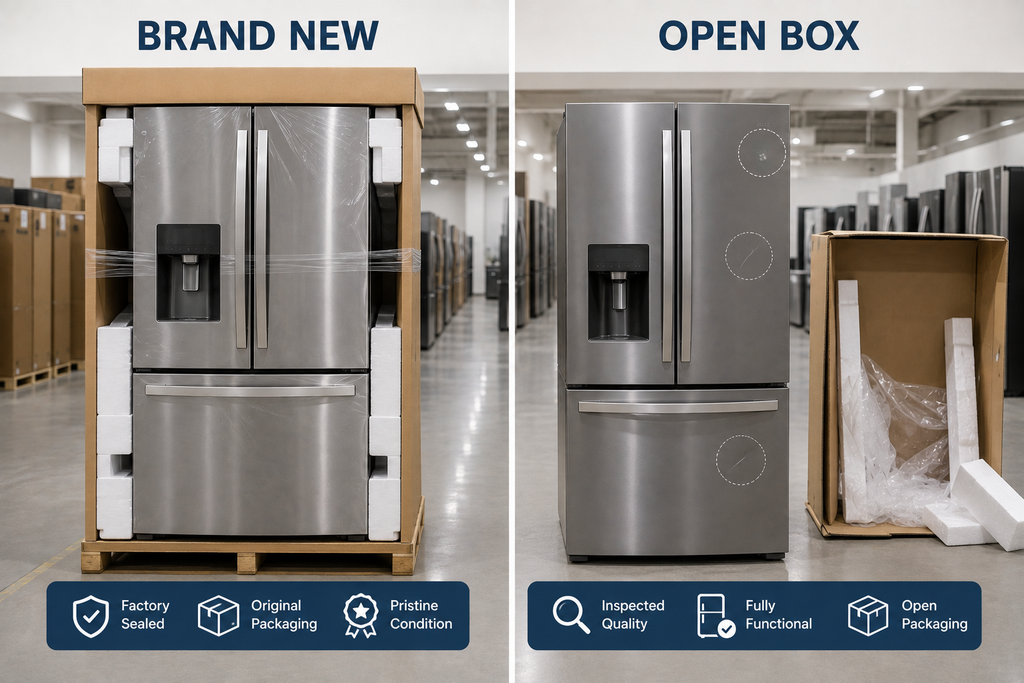
And there is another decision worth considering: Do you need a brand-new refrigerator, or could an open-box model give you the features you want for less?

The best refrigerator is not necessarily the one with the most features. It is the one that fits your kitchen, household, shopping habits, budget, and expectations for convenience and maintenance. This guide compares what matters when shopping for a refrigerator with ice and water features, including what to consider when buying an open-box appliance.
Are Ice Makers and Water Dispensers Worth It?
For many households, an ice maker and water dispenser can make everyday kitchen tasks easier. But they are not essential for everyone.

An external water dispenser can be useful if your family regularly drinks chilled water. A built-in ice maker can also save you from filling and storing ice trays, particularly if you entertain often or use a lot of ice.
However, these features can also add complexity. Dispensers and ice makers have additional components that may require cleaning, filter replacement, or servicing over time.
So before paying more for these features, consider how you actually use your refrigerator.
An ice maker and water dispenser may be worthwhile if you:
- Use ice frequently
- Drink filtered water throughout the day
- Have a large household
- Regularly entertain guests
- Prefer not to keep ice trays in the freezer
- Want convenient access to water without opening the refrigerator
You may not need them if you:
- Rarely use ice
- Prefer a simpler refrigerator design
- Want to maximise freezer or refrigerator storage
- Are prioritising the lowest purchase price
The goal is not to buy the refrigerator with the longest feature list. It is to pay for the features you will actually use.
What to Look For in a Refrigerator With Ice and Water
Before comparing specific models, focus on the features that can affect your everyday experience.
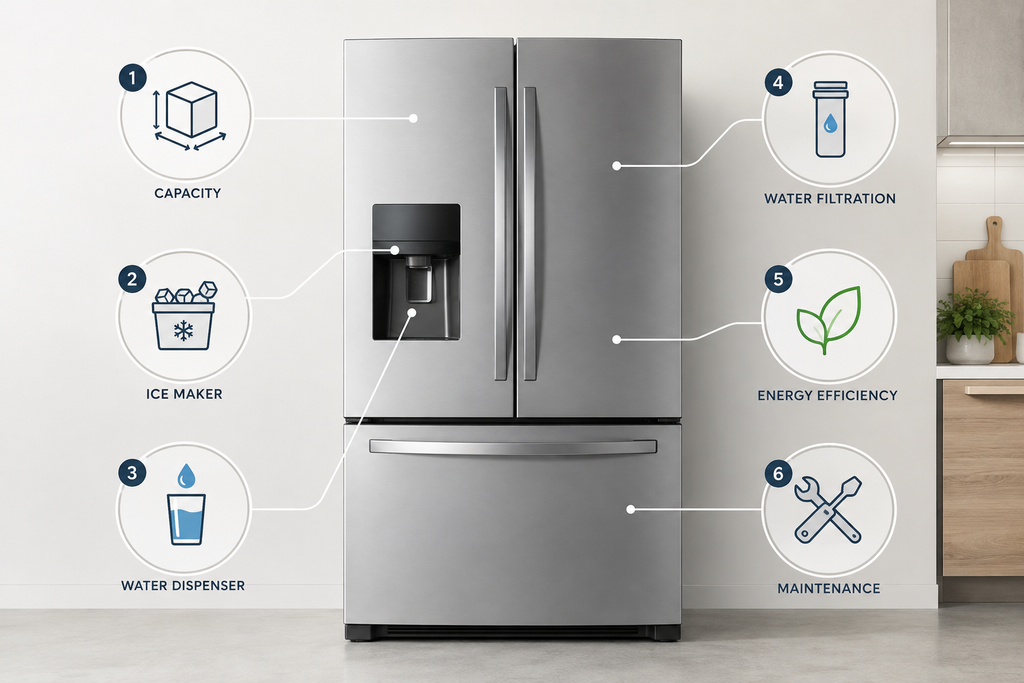
1. Refrigerator Capacity
Capacity should match both your household and your shopping habits.
A larger family that buys groceries in bulk may benefit from a larger refrigerator, while a couple or someone living in a smaller home may prefer a more compact model.
Don’t choose capacity based only on the number of people in your household. Think about how often you shop, how much frozen food you store, and whether you regularly keep large containers, platters, or drinks in the refrigerator.
Also measure the available space in your kitchen before ordering. Check the refrigerator’s width, height, depth, door clearance, and surrounding ventilation requirements.
2. Ice Maker Type
Not every ice maker produces the same type or quantity of ice.
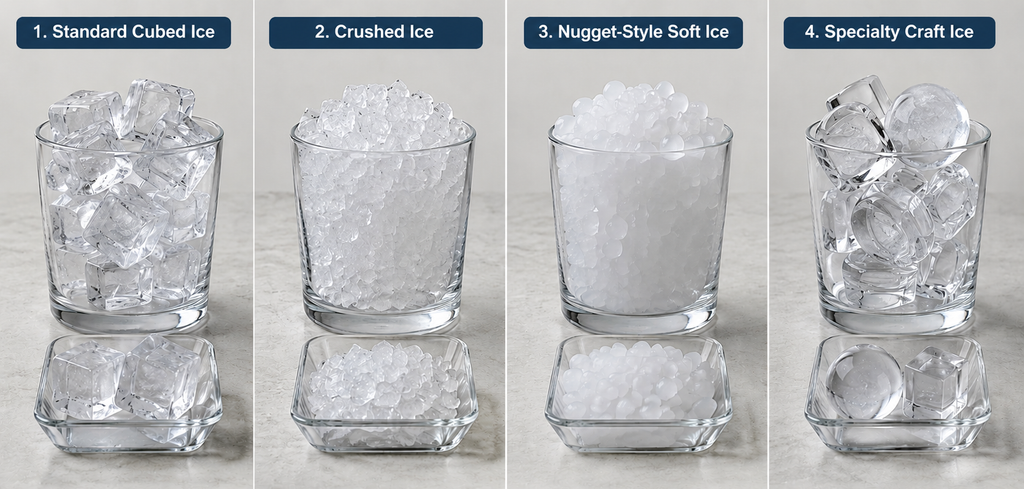
Depending on the model, you may find:
- Standard cubed ice
- Crushed ice
- Nugget-style ice
- Specialty or craft ice
- Dual ice makers
If you mostly use ice for everyday drinks, a standard ice maker may be enough. If you entertain frequently or specifically prefer softer nugget-style ice, paying more for a particular ice system may make sense.
3. Water Dispenser Design
Water dispensers can be located inside or outside the refrigerator.
External dispensers provide quick access without opening the door.
Internal dispensers can give the refrigerator a cleaner exterior appearance and may reduce the number of openings in the door.
Neither is automatically better. Think about convenience, appearance, cleaning, and how frequently your household uses the dispenser.
4. Water Filtration
If filtered water is important to you, check the actual filtration specifications for the refrigerator you are considering.
Do not assume that every refrigerator filter removes the same contaminants. Filtration performance varies between models and replacement filters.
Look at the manufacturer’s specifications to understand what the filter is designed or certified to reduce and how frequently the filter needs to be replaced.
5. Energy Efficiency
A refrigerator runs continuously, so energy use can matter over its lifetime.
ENERGY STAR® certification can be a useful starting point, but also compare the model’s estimated annual energy consumption when available.
A larger refrigerator with more features may not necessarily be the most economical choice for your household. Consider the balance between capacity, features, purchase price, and ongoing energy use.
6. Maintenance
Ice makers and water dispensers add convenience, but they also introduce components that need attention.
Before buying, find out:
- Which filters need replacement
- How often filters should be changed
- How the ice maker is cleaned
- Whether replacement parts are readily available
- What warranty coverage applies
- What the return policy says if a problem occurs
These details can be more important than having another smart feature you may rarely use.