Choosing a bathtub is about more than how the tub looks. The right option should fit your bathroom, match how you use the space, and make getting in and out comfortable.
Two options that often come up are soaking tubs and walk-in tubs. While both are designed for bathing, they serve different needs.
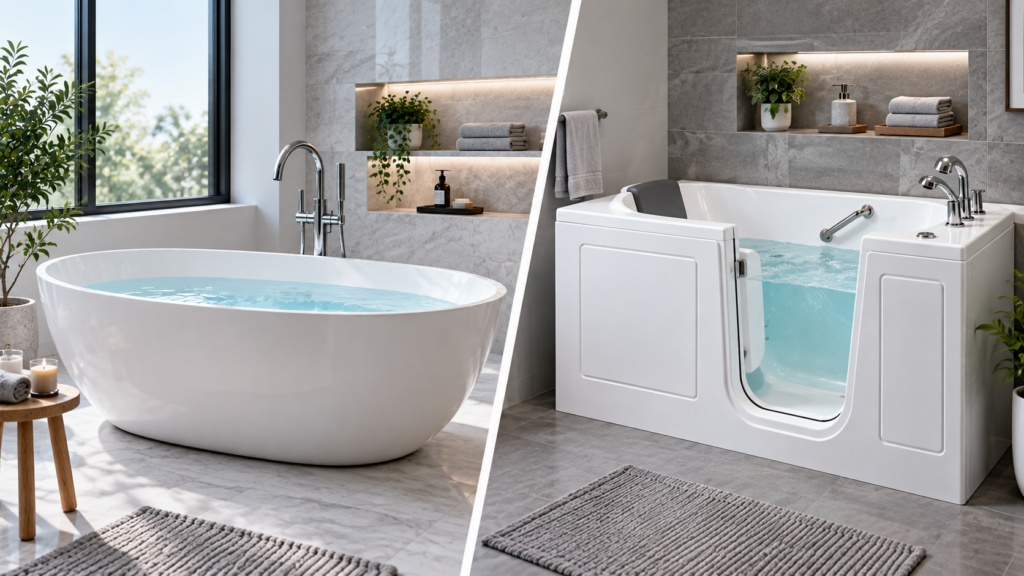
A soaking tub is generally chosen for a deeper, more relaxing bathing experience, while a walk-in tub is designed around easier entry and exit.
So, which one makes more sense for your bathroom?
Let’s compare them by the things that actually matter before you buy.
Soaking Tub vs Walk-In Tub: What’s the Difference?
The biggest difference is how each tub is designed to be used.
A soaking tub typically has a deeper basin that allows you to immerse more of your body while bathing. It can be a good choice when relaxation and the overall look of the bathroom are your priorities.
A walk-in tub has a built-in door and a low-threshold entry, allowing you to step into the tub rather than lifting your leg over a traditional tub wall. This makes accessibility one of its main advantages.
| Feature | Soaking Tub | Walk-In Tub |
|---|---|---|
| Main purpose | Deep, relaxing baths | Easier and safer entry |
| Entry | Requires stepping over the tub wall | Low-threshold door entry |
| Bathing position | Usually seated or reclined | Often designed for seated bathing |
| Accessibility | Depends on tub height and design | Designed with accessibility in mind |
| Bathroom planning | Available in several configurations | Requires careful planning for door and plumbing |
| Best suited for | Relaxation-focused bathrooms | Bathrooms where easy access is important |
1. Think About How You Actually Use Your Bathtub
Before comparing features, think about what you want from the tub.
If you picture yourself filling the tub after a long day and spending time soaking, a soaking tub may better match that experience.
If your main concern is being able to enter and exit the tub without stepping over a high wall, a walk-in tub may make more practical sense.
This is why there isn’t one universal answer when comparing a soaking tub vs walk-in tub. The better choice depends on how the bathroom will be used.
2. Consider the Tub Entry
Entry is one of the most important differences.
With a soaking tub, you normally need to step over the tub wall to get inside. The height of that wall varies by design, so check the actual product dimensions rather than assuming every tub has the same entry height.
A walk-in tub uses a door in the side of the tub. You enter through the opening, sit down, and then close the door before filling the tub.
However, there is an important trade-off: because the door needs to remain closed while the tub is filled or drained, you generally need to remain seated until the water has drained sufficiently before opening it.
If easy entry is your priority, this difference should be part of your decision.
3. Compare the Bathing Experience
A soaking tub is primarily about the bathing experience.
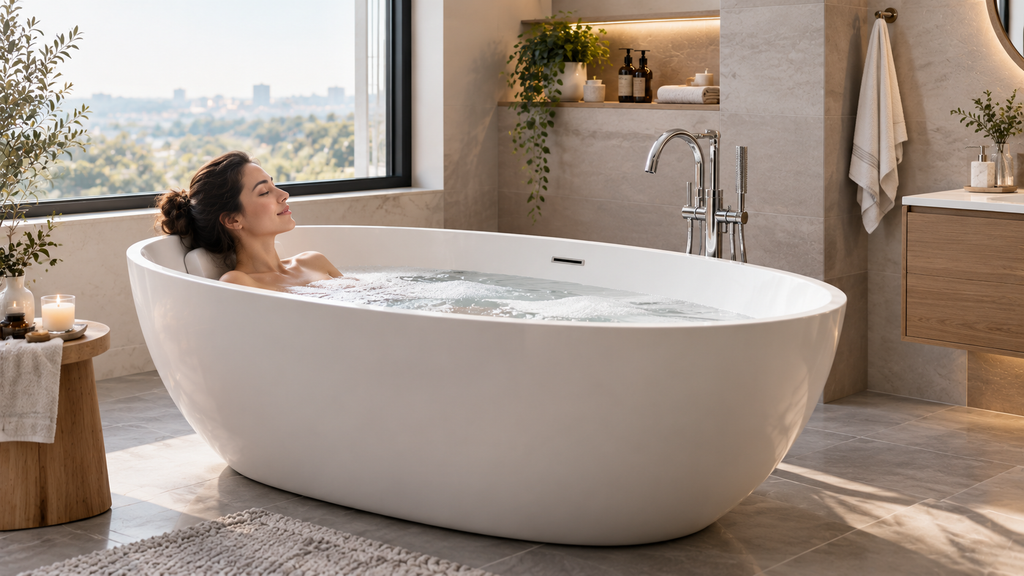
Its deeper design can allow you to immerse more of your body than you might in a standard bathtub. Depending on the model, the shape may also provide a more comfortable position for relaxing.
A walk-in tub focuses more on accessibility and seated bathing. Depending on the model, it may include features such as built-in seating, grab bars, handheld shower systems, or other accessibility-oriented features.
So when comparing soaking tub benefits with walk-in tub benefits, don’t look only at the number of features. Ask which features you’ll actually use.
4. Check How Much Bathroom Space You Have
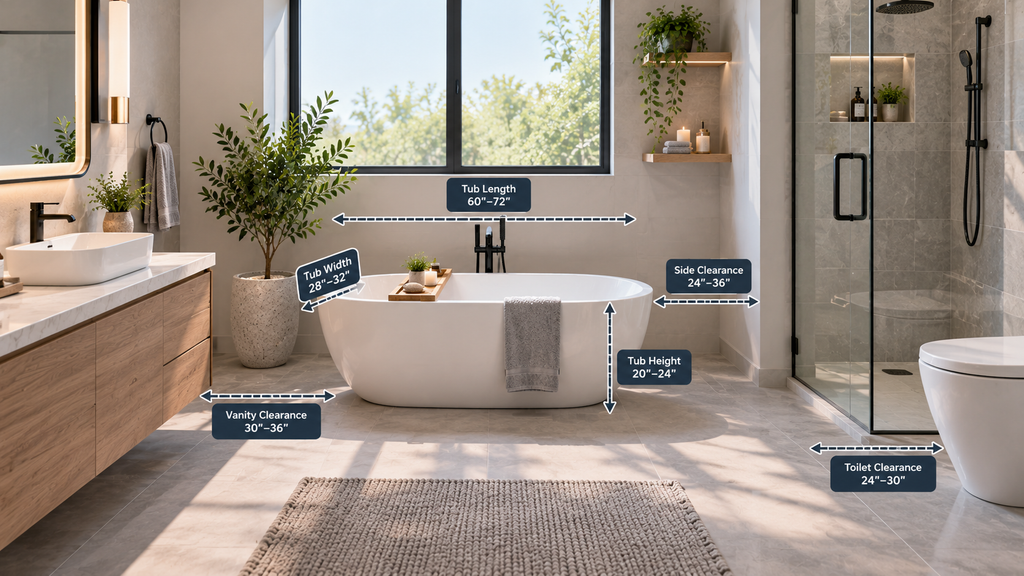
Don’t choose a tub based only on its overall length and width.
You also need to think about:
- The available wall-to-wall space
- The position of the bathroom door
- Vanity and toilet placement
- Plumbing locations
- Clearance around the tub
- How the tub door will operate, if choosing a walk-in model
- Whether you need space to move comfortably around the tub
A walk-in tub can require particularly careful planning because its door and entry area need to work with the surrounding bathroom layout.
Before buying, measure the available space and compare it with the manufacturer’s actual installation dimensions.
5. Think About Accessibility
Accessibility can be the deciding factor for many homeowners.
A traditional soaking tub requires you to step over the tub wall. For someone who has difficulty lifting their legs or maintaining balance, that movement may not be comfortable.
A walk-in tub is specifically designed to reduce that barrier through its door and lower entry.
But accessibility involves more than the door. Look at the complete design, including:
- Seat height
- Door opening size
- Grab bar placement
- Floor texture
- Faucet and control locations
- Handheld shower availability
- Space beside the tub for transfers
If accessibility is important, compare these details rather than assuming that every walk-in tub will work equally well in your bathroom.
6. Don’t Forget Installation
Installation can be very different between the two options.
A soaking tub may be relatively straightforward if you’re replacing an existing tub with a model that uses a compatible footprint and plumbing configuration. Freestanding and specialty soaking tubs can have different requirements.
Walk-in tubs can require more planning because of their door, weight, plumbing, electrical requirements for certain features, and the need to fit the existing bathroom layout.
Before purchasing either option, review the manufacturer’s installation requirements and confirm whether your existing bathroom can accommodate the tub.
7. Compare Cost Beyond the Tub Price
The purchase price isn’t the only cost to consider.
Your total project cost can also include:
- Removal of the existing bathtub
- Plumbing changes
- Flooring or wall repairs
- Installation labor
- Electrical work where required
- New fixtures or accessories
- Changes needed to accommodate the tub’s dimensions
A less expensive tub can become a more expensive project if it requires significant bathroom modifications.
That’s why it’s useful to compare the complete installation, not just the product price.
Soaking Tub vs Walk-In Tub: Which One Should You Choose?
Instead of asking which tub is universally better, start with your bathroom and your priorities.
A soaking tub may make sense if:
- You prioritize a deep, relaxing bath.
- You prefer a traditional or spa-like bathroom experience.
- You don’t need a low-entry bathing solution.
- Your bathroom layout can accommodate the tub comfortably.
- You want more flexibility in tub styles and configurations.
A walk-in tub may make sense if:
- Easy entry and exit are important.
- You want to reduce the need to step over a tub wall.
- Seated bathing is more comfortable for you.
- Accessibility is a major consideration.
- Your bathroom can accommodate the tub and its door configuration.
What Should You Check Before Buying?
Before making a decision, measure your bathroom and check the product specifications carefully.
Measure the available space
Record the length, width, and height of the area where the tub will be installed. Also check nearby doors, fixtures, and walking paths.
Check the entry
For a soaking tub, measure the tub wall height. For a walk-in tub, check the threshold height and door opening.
Review installation requirements
Confirm plumbing connections, electrical requirements, floor support, and any manufacturer-specific installation requirements.
Think about everyday use
Ask yourself whether you care more about a deeper soaking experience or easier access. The answer can make the choice much simpler.
Consider the long-term fit
A bathtub is not something you typically replace frequently. Choose a design that works not only for how you use your bathroom today but also for how you expect to use it in the future.
Final Thoughts
The choice between a soaking tub vs walk-in tub ultimately comes down to what you want your bathtub to do for you.
A soaking tub focuses on a deeper, more relaxing bathing experience, while a walk-in tub puts greater emphasis on easier access and seated bathing.
Before you buy, look beyond the tub’s appearance. Measure your bathroom, check entry and clearance requirements, review installation needs, and consider how you’ll use the tub every day.
When the tub fits both your bathroom and your lifestyle, you’re much more likely to be happy with the choice long after installation.